Growing Snap Peas in Georgia
Snap peas are a short-lived Georgia cool-season crop. Plant early enough for vines to flower and fill sweet, crisp pods before sustained heat arrives, and give climbing varieties support from the start.
Georgia Snap Pea Quick Facts
- Best seasons: early spring and, where the season is long enough, fall.
- Planting method: direct sow about 1 inch deep.
- Plant spacing: about 2 inches, with room to harvest along the trellis.
- Light: full sun during cool weather.
- Support: install a trellis or pea netting before vines tangle.
- Harvest: pick pods frequently while crisp and tender.
When to Plant Snap Peas in Georgia
Direct sow as soon as the soil can be worked in late winter or early spring. South Georgia gardeners usually plant first because heat arrives sooner; Middle Georgia follows; North Georgia can plant later as soils thaw and drain. A fall crop is most dependable where gardeners can sow early enough for plants to mature before hard freezes. Use the Georgia planting calendar and local frost dates rather than relying on one statewide week.
Snap peas decline as Georgia weather becomes hot. One or two succession sowings about two weeks apart can extend a spring harvest, but later sowings are not useful if flowering will occur in sustained heat. Remove spent vines and rotate the bed to a warm-season crop.
Varieties and Trellis Planning
Compact types such as Sugar Ann fit smaller spaces, while vigorous types such as Super Sugar Snap need taller support. Check the seed packet for vine height and days to maturity. Install trellis, netting or a sturdy fence at planting so young tendrils can climb without later root disturbance.
Soil, Sun and Water
- Choose full sun and loose, well-drained soil. Work finished compost into Georgia clay and use a raised bed where water lingers.
- Use a soil test to guide lime and fertility; peas do not benefit from excessive nitrogen that produces vines at the expense of pods.
- Direct sow about 1 inch deep and approximately 2 inches apart. Keep the seedbed evenly moist through germination.
- Water at soil level when possible. Consistent moisture during flowering and pod fill helps maintain quality, while saturated roots invite disease.
- Mulch after seedlings establish to limit weeds and soil-moisture swings.
Growing Snap Peas in Containers
Choose a container with good drainage and enough depth and width for a stable trellis. Use fresh potting mix instead of heavy garden soil, select a compact cultivar when space is tight, and check moisture often because containers dry quickly on bright Georgia days.
Georgia Companion Planting with Snap Peas
Radishes, lettuce and carrots can share cool-season bed space where the pea trellis does not shade them excessively. Peas are legumes, but that does not eliminate the need for rotation, adequate airflow or balanced fertility. Plan neighbors around light, water, harvest access and mature size; the GA Garden companion planting guide explains this practical approach.
Common Pests, Diseases and Troubleshooting
Aphids, caterpillars, cutworms and leaf-feeding pests may attack young growth, while powdery mildew and root problems become more likely when airflow is poor or soil stays wet. Inspect vines and leaf undersides regularly, remove badly diseased residue after harvest and rotate away from legumes. Confirm the pest or disease before applying any product.
- Seeds rot before emerging: the bed may be cold or waterlogged; wait for workable soil and improve drainage.
- Lots of vines but few pods: heat, poor pollination or excessive nitrogen may be involved.
- Pods turn tough: pick earlier and check vines every day or two during peak production.
Harvesting and Storing Snap Peas
Pick when pods are bright, crisp and well filled but before the pod walls become tough. Hold the vine with one hand while picking with the other to avoid tearing it from the trellis. Harvest frequently to keep plants producing. Cool pods promptly, keep them dry in the refrigerator and use them within several days for the best texture. See GA Garden's harvesting guides for more crop-handling help.
Grow → Harvest → Cook: Fresh pods work raw, blanched or quickly cooked. The recipes below lead directly from the trellis to the table, and the Georgia Garden Recipe Finder offers the complete collection.
Snap Pea Recipes
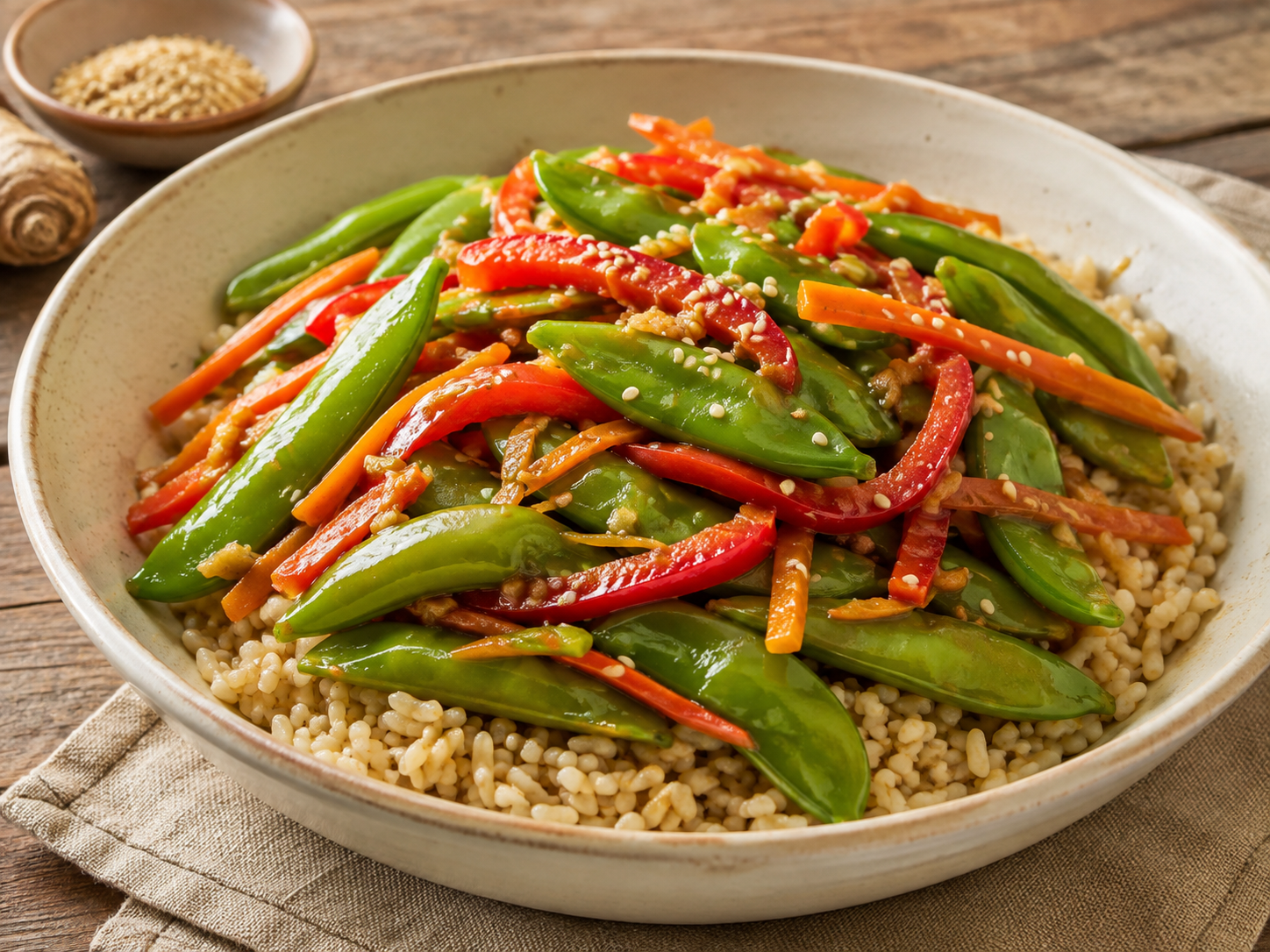
Sesame Ginger Snap Pea Stir-Fry
Snap peas, bell pepper and carrots stir-fried with sesame oil, soy sauce and ginger.
Ingredients
- 2 cups snap peas, ends trimmed
- 1 red bell pepper, thinly sliced
- 1 carrot, julienned
- 2 tablespoons sesame oil
- 2 tablespoons soy sauce
- 1 tablespoon rice vinegar
- 1 tablespoon honey
- 1 tablespoon fresh ginger, minced
- 2 cloves garlic, minced
- 1 tablespoon sesame seeds (optional)
- Cooked brown rice or noodles for serving
Instructions
- In a wok or large skillet, heat sesame oil over medium-high heat.
- Add minced ginger and garlic, stirring for about 30 seconds until fragrant.
- Add snap peas, red bell pepper, and julienned carrot to the wok. Stir-fry for 2-3 minutes until the vegetables are crisp-tender.
- In a small bowl, whisk together soy sauce, rice vinegar, and honey.
- Pour the sauce over the vegetables and toss to coat evenly.
- Cook for an additional 1-2 minutes, allowing the sauce to thicken slightly.
- Sprinkle sesame seeds over the stir-fry if desired.
- Serve the Sesame Ginger Snap Pea Stir-Fry over cooked brown rice or noodles.
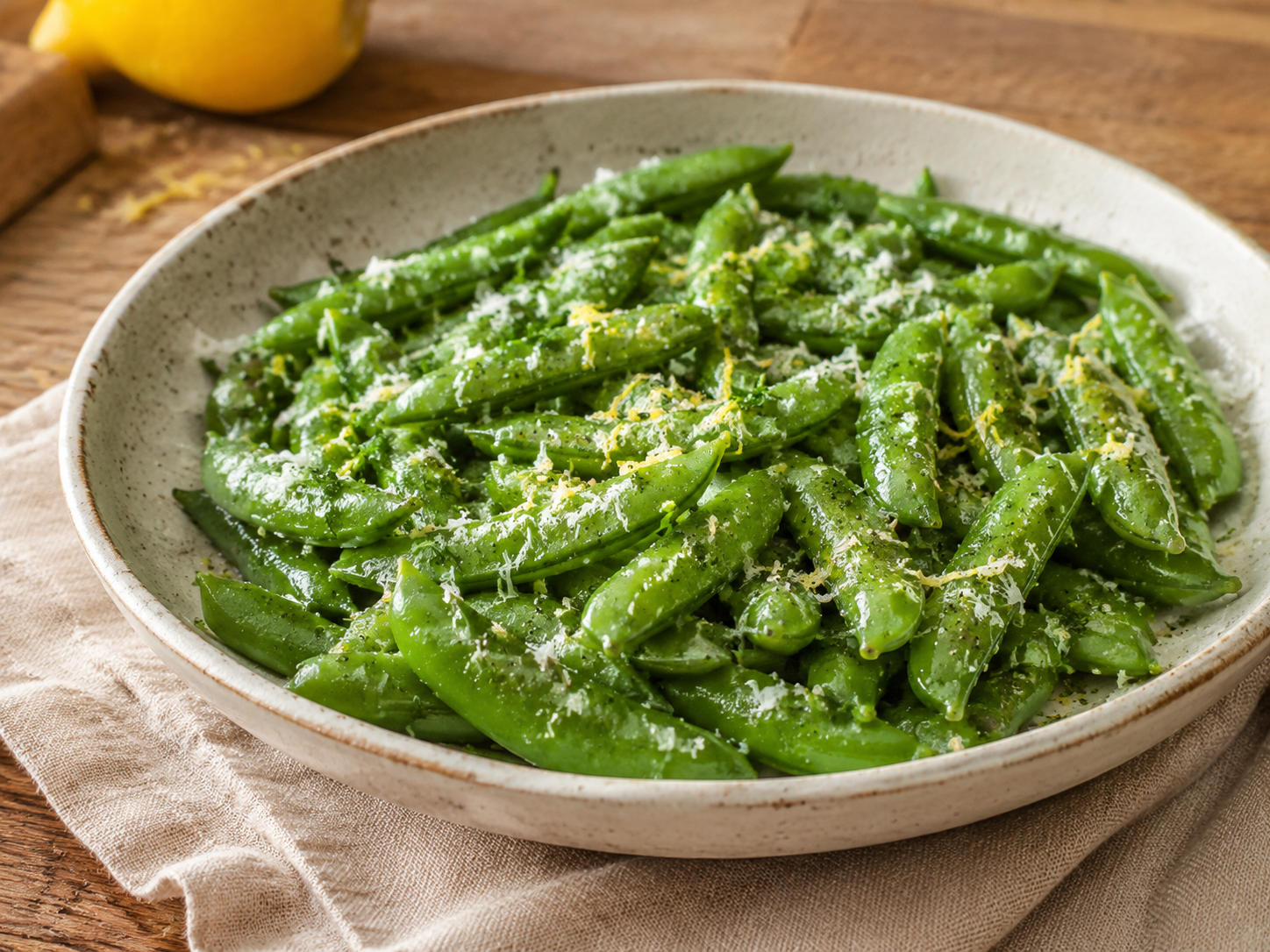
Lemon Parmesan Snap Peas
Crisp snap peas dressed with fresh lemon and finished with grated Parmesan.
Ingredients
- 2 cups snap peas, ends trimmed
- 2 tablespoons olive oil
- Zest of 1 lemon
- 2 tablespoons freshly squeezed lemon juice
- 1/4 cup grated Parmesan cheese
- Salt and black pepper to taste
- Chopped fresh parsley for garnish
Instructions
- Blanch snap peas in boiling water for 1-2 minutes, then immediately transfer to an ice bath to stop the cooking process. Drain and set aside.
- In a large skillet, heat olive oil over medium heat.
- Add blanched snap peas to the skillet and toss to coat in the oil.
- Drizzle lemon juice over the snap peas and sprinkle lemon zest.
- Add grated Parmesan cheese, tossing to combine.
- Cook for an additional 2-3 minutes until the snap peas are heated through.
- Season with salt and black pepper to taste.
- Garnish with chopped fresh parsley before serving.
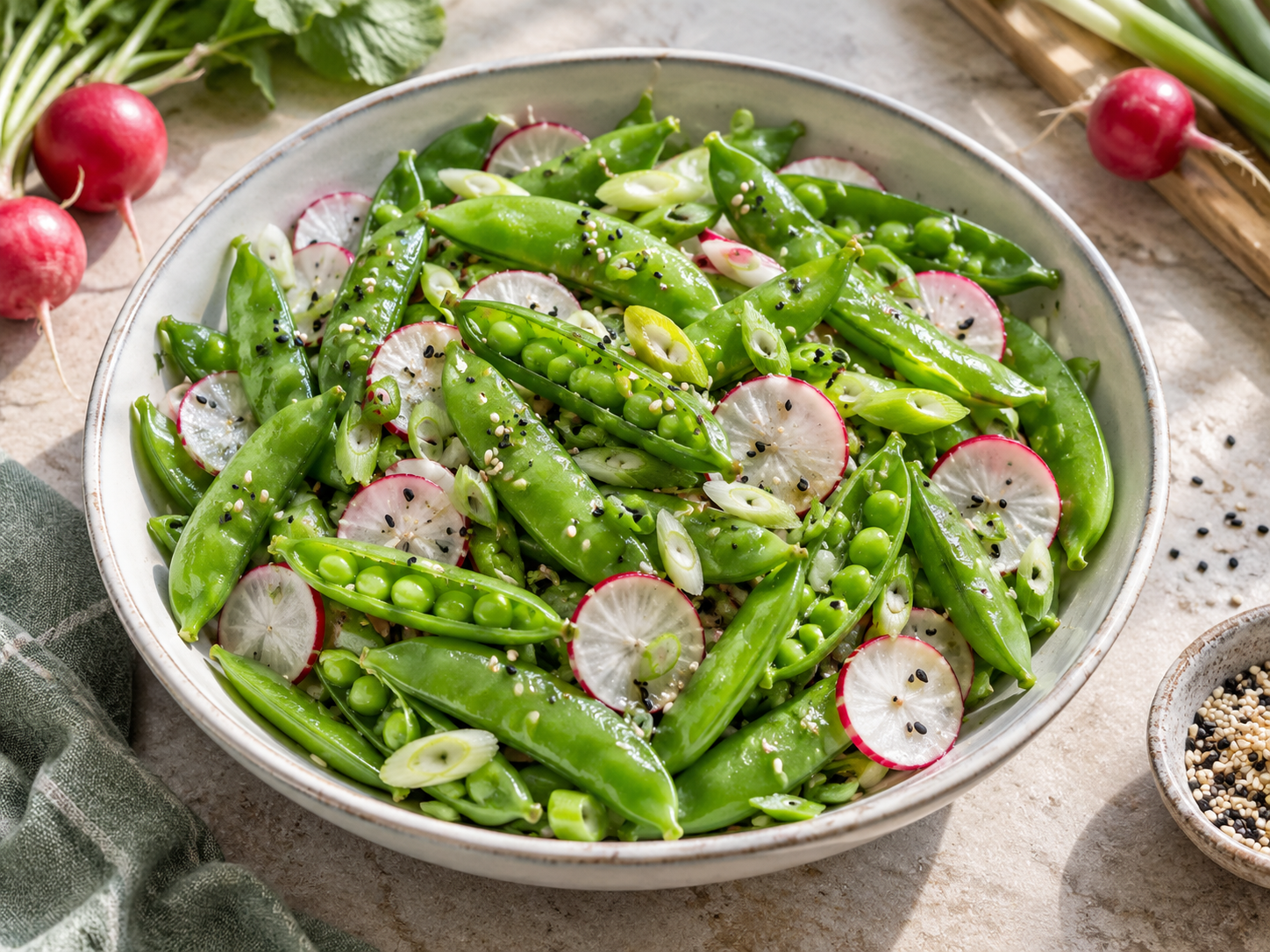
Sesame Snap Pea and Radish Salad
Crisp whole snap-pea pods and garden radishes are tossed with scallions and a bright sesame-ginger dressing.
Ingredients
- 1 pound sugar snap peas, strings removed
- 6 medium radishes, thinly sliced
- 3 scallions, thinly sliced
- 3 tablespoons unseasoned rice vinegar
- 2 tablespoons low-sodium soy sauce
- 1 tablespoon toasted sesame oil
- 1 teaspoon honey
- 1 teaspoon finely grated fresh ginger
- 1 tablespoon toasted sesame seeds
Instructions
- Bring a medium pot of water to a boil and prepare a bowl of ice water. Blanch the snap peas for 60 seconds, then transfer them immediately to the ice water.
- Drain the snap peas and pat them very dry. Leave most whole and split a few lengthwise to expose the peas.
- Whisk the rice vinegar, soy sauce, sesame oil, honey and ginger in a large bowl.
- Add the snap peas, radishes and scallions and toss until lightly coated.
- Sprinkle with the sesame seeds and serve immediately, or chill for up to 30 minutes for a colder salad.
Garden note: Dry the blanched pods thoroughly so the dressing clings. Young pods can also be used raw when they are especially tender.