Growing Garden Peas in Georgia
Garden peas are a true cool-season crop. In Georgia, the best spring crop starts well before the last frost date so vines can flower and fill pods before sustained heat arrives. This guide covers English shelling peas, snap peas and snow peas; for heat-loving cowpeas, see Garden Peas vs. Southern Peas below.
Late winter through spring
Direct sow outdoors
Usually 60–80 days, depending on type and variety
When to Plant Garden Peas in Georgia
UGA Cooperative Extension lists January 15 through February 15 as the approximate Middle Georgia spring window for garden peas. North Georgia planting generally shifts about two weeks later; South Georgia can often plant about two weeks earlier. Weather and workable soil matter more than the calendar alone.
| Georgia region | Practical spring window | What to watch |
|---|---|---|
| North Georgia | Approximately late January through early March | Wait until saturated or frozen soil can be worked; elevation and local frost patterns vary. |
| Middle Georgia | Approximately January 15–February 15 | This is the UGA planting-chart baseline. |
| South Georgia | Approximately early January through early February | Plant early enough for pod development before rapid spring warming. |
Fall caution: UGA's statewide home-garden chart does not recommend a standard fall planting for garden peas. A protected microclimate may allow experimentation, but spring is the dependable Georgia season.
North Georgia calendar · Middle Georgia calendar · South Georgia calendar
Garden Peas vs. Southern Peas
“Peas” can mean two very different Georgia crops. English, snap and snow peas prefer cool weather and belong in the late-winter garden. Southern peas—such as black-eyed, crowder and cream peas—are warm-season legumes planted after soils warm. Do not use southern-pea timing for garden peas.
Choose the Right Pea Type
- English or shelling peas: Harvest the peas inside and discard the fibrous pod.
- Snap peas: Harvest plump, crisp edible pods before they become tough.
- Snow peas: Harvest flat edible pods while the seeds are still small.
- Bush vs. vining: Bush types need less support; taller vines benefit from netting, fencing or a trellis installed at planting.
Soil, Sun and Georgia Clay
Choose a site with full sun and well-drained soil. Georgia red clay can hold water around roots during winter rain, so avoid low spots and improve structure with finished compost when appropriate. Raised rows or beds can help where drainage is slow. Use a soil test to guide lime and fertilizer instead of applying either by habit; excessive nitrogen can produce leafy vines without improving pod production.
How to Plant Peas
- Prepare the bed only when soil is dry enough to crumble rather than smear.
- Install support before sowing tall varieties.
- Direct sow seed about 1½ to 2 inches deep. UGA's chart uses approximately 1 inch between plants as a home-garden baseline; follow the seed packet when a variety needs more room.
- Firm the soil gently and water the row if rainfall is insufficient.
- Keep the seed zone evenly moist during germination, but do not leave it waterlogged.
Watering, Mulch and Cool-Season Care
Keep moisture reasonably even, especially during flowering and pod fill. Water at the root zone when practical so foliage does not remain wet longer than necessary in humid weather. Once plants are established, a light organic mulch can reduce soil splash and moisture swings. Pull weeds shallowly because pea roots grow near the soil surface.
Trellising and Airflow
Guide vines onto their support while they are young. A trellis keeps pods visible, makes harvesting easier and helps foliage dry after rain. Avoid crowding the row: dense vines in a wet Georgia spring can hold humidity and increase disease pressure.
Georgia Companion Planting with Peas
Use companion planting to coordinate season, height, water needs and bed space—not as a promise that a neighbor plant will repel every pest. Peas can share a cool-season plan with crops such as carrots, radishes and leafy greens when spacing and harvest timing work. Keep tall pea trellises where they will not shade shorter crops.
Rotation matters. Peas, beans and southern peas are legumes, so moving from one legume to another is not a true family rotation. When practical, follow peas with a crop from another family and avoid repeatedly placing them in a bed with a history of pea root disease.
Common Pea Problems in Georgia
- Poor germination: Waterlogged, crusted or very cold soil can reduce stands. Replant only after correcting drainage or surface crusting.
- Aphids: Inspect new growth and undersides of leaves. A firm water spray may handle a light population; use only products labeled for peas when treatment is warranted.
- Root and crown rots: Improve drainage, rotate crop families and avoid working saturated soil.
- Leaf spots or mildew: Preserve airflow, water near the soil and remove badly affected debris after harvest.
- Flowers but few pods: Late planting and rapidly rising temperatures can interrupt pollination and pod set.
Identify the problem before treating it. Use GA Garden's pest and disease guide and consult your county Extension office for local diagnoses.
Harvest and Storage
Pick every day or two once pods begin maturing. Harvest snow peas while pods are flat, snap peas when pods are crisp and rounded, and shelling peas when seeds have filled the pod but remain tender. Hold the vine with one hand while picking to avoid tearing it from the trellis.
Cool peas soon after harvest. Their sugars change quickly, so use them fresh or refrigerate promptly in a breathable container. Shell only what you are ready to cook or preserve.
From the Georgia Garden to the Kitchen
- Toss snap or snow peas into a quick stir-fry near the end of cooking.
- Blanch shelling peas briefly and finish with herbs and butter or olive oil.
- Blend cooked peas with mint for soup or a simple spread.
- Add tender pea shoots only when the seed source and variety are intended for edible shoots.
Garden Pea Recipes
These recipes work with freshly shelled garden peas. Frozen peas are a practical substitute when the harvest is small or has already been used.
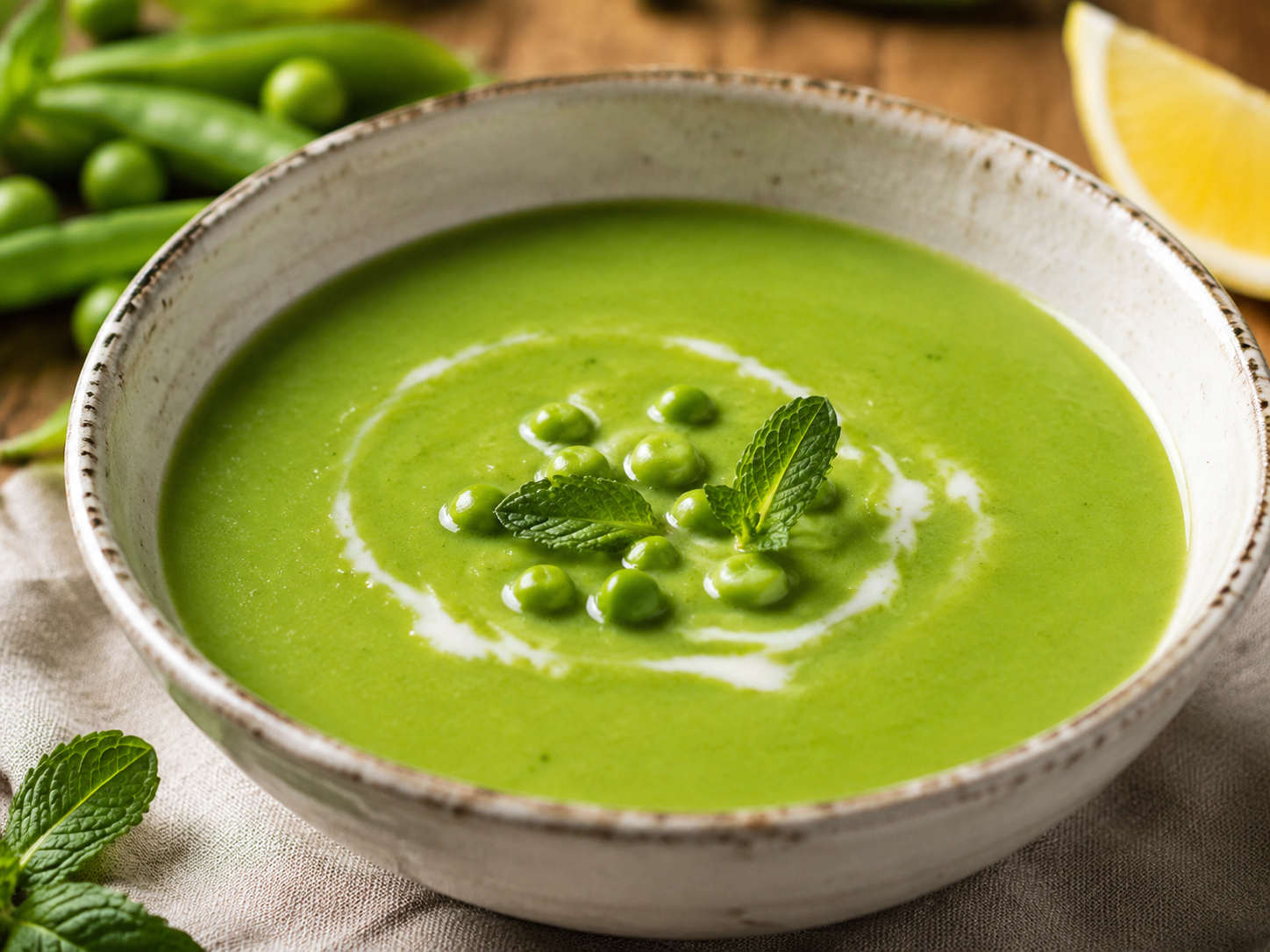
Spring Pea and Mint Soup
A smooth, bright-green soup that keeps the sweet flavor of peas at the center.
Ingredients
- 2 tablespoons butter or olive oil
- 1 small yellow onion, diced
- 2 cloves garlic, minced
- 4 cups fresh shelled peas or frozen peas
- 3 cups low-sodium vegetable broth
- 1/4 cup loosely packed fresh mint leaves
- 1 tablespoon fresh lemon juice
- 1/2 teaspoon salt, plus more to taste
- 1/4 teaspoon black pepper
- Plain yogurt or cream for serving (optional)
Instructions
- Heat the butter or olive oil in a medium pot over medium heat. Add the onion and cook for 5 to 6 minutes, stirring occasionally, until softened but not browned.
- Add the garlic and cook for 30 seconds, just until fragrant.
- Stir in the peas and vegetable broth. Bring to a gentle simmer and cook for 4 to 6 minutes, until the peas are tender and bright green.
- Remove the pot from the heat. Add the mint, lemon juice, salt and pepper.
- Blend carefully with an immersion blender until smooth, or blend in batches in a countertop blender with the center cap vented according to the manufacturer's instructions.
- Taste and adjust the seasoning. Serve warm, topped with yogurt or cream if desired.
Harvest and storage note: Shell fresh peas shortly before cooking for their best sweetness. Cool leftovers promptly, cover and refrigerate for up to four days.
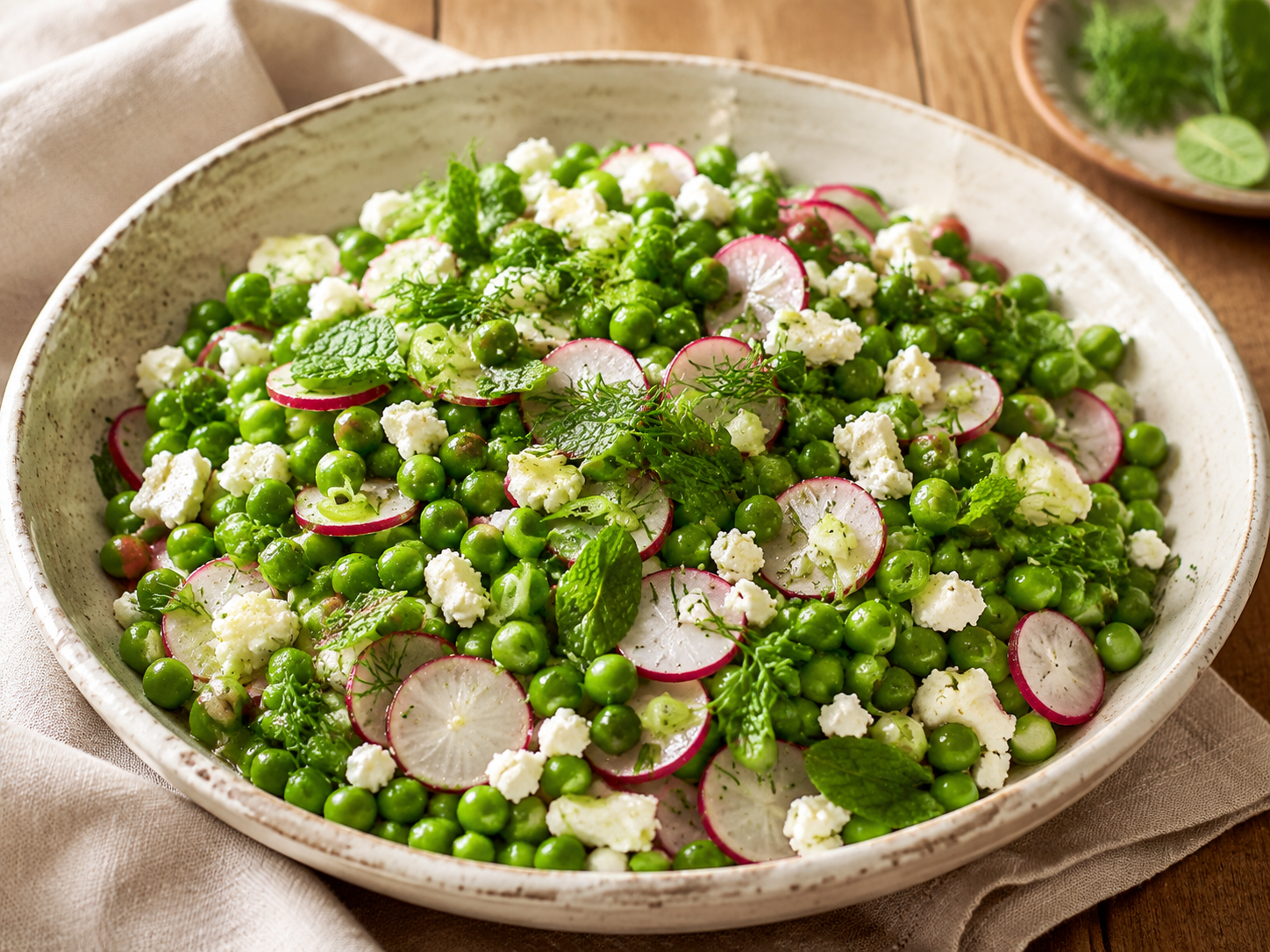
Garden Pea, Radish and Feta Salad
Tender peas and crisp radishes make a useful bridge between early Georgia garden harvests.
Ingredients
- 3 cups fresh shelled peas or frozen peas
- 6 radishes, thinly sliced
- 1/2 cup crumbled feta cheese
- 2 green onions, thinly sliced
- 2 tablespoons chopped fresh dill or mint
- 2 tablespoons extra-virgin olive oil
- 1 1/2 tablespoons fresh lemon juice
- 1 teaspoon Dijon mustard
- 1/4 teaspoon salt
- Black pepper to taste
Instructions
- Bring a saucepan of water to a boil. Add the peas and cook for 1 to 2 minutes, until just tender.
- Drain the peas and immediately rinse them under cold water until cool. Drain thoroughly.
- Whisk the olive oil, lemon juice, Dijon mustard, salt and black pepper in a large bowl.
- Add the peas, radishes, feta, green onions and dill or mint. Toss gently until evenly dressed.
- Serve immediately or refrigerate briefly before serving.
Preparation note: Slice radishes just before assembling so they remain crisp. This salad is best served the day it is made.
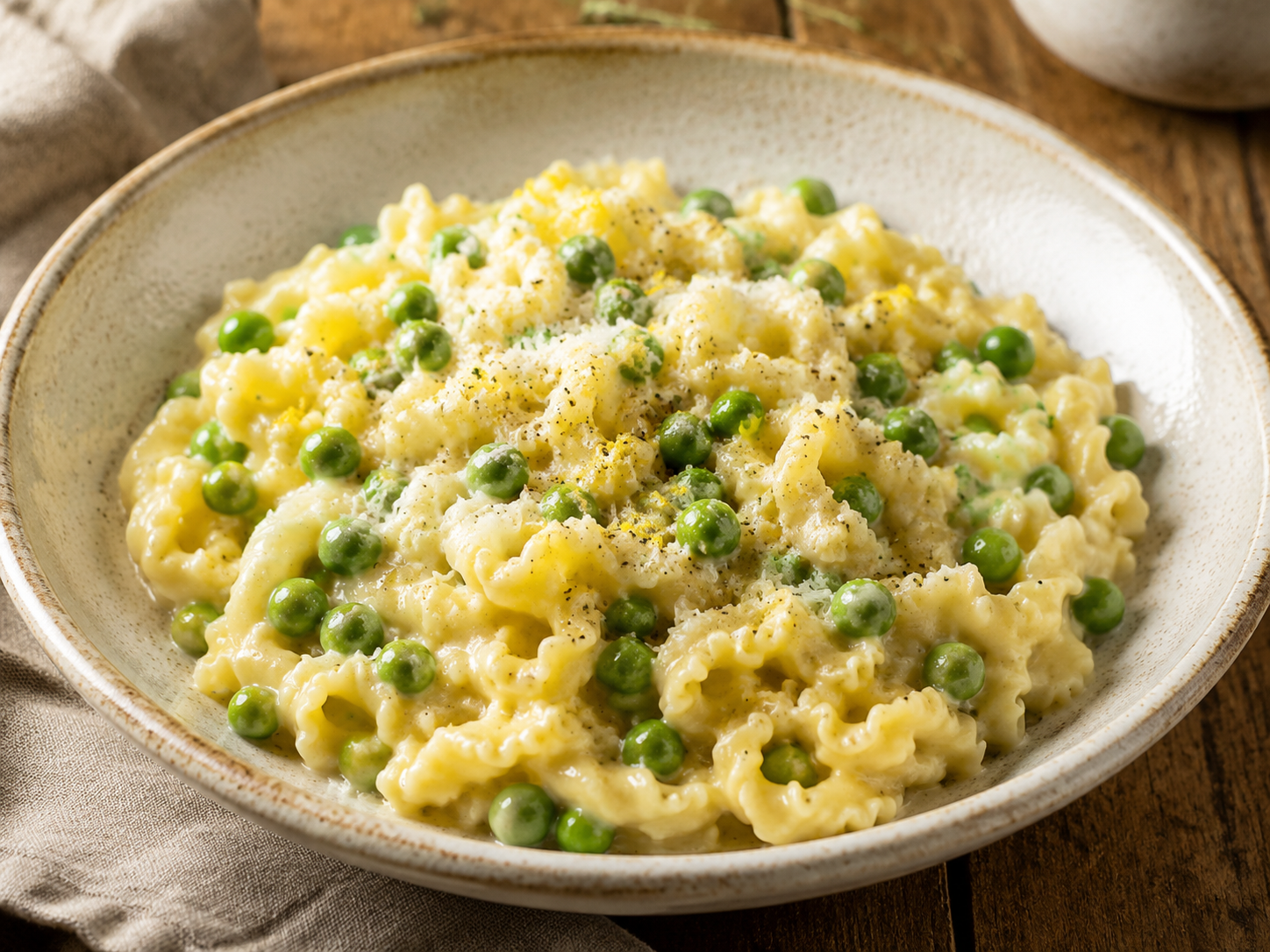
Creamy Pea and Parmesan Pasta
A simple weeknight pasta in which pasta water and Parmesan form the sauce—no heavy cream required.
Ingredients
- 12 ounces short pasta
- 2 cups fresh shelled peas or frozen peas
- 2 tablespoons butter
- 2 cloves garlic, minced
- 3/4 cup finely grated Parmesan cheese, plus more for serving
- 1 teaspoon finely grated lemon zest
- 1 tablespoon fresh lemon juice
- 1/2 teaspoon salt, plus salt for the pasta water
- 1/4 teaspoon black pepper
Instructions
- Cook the pasta in well-salted water according to the package directions. Add the peas during the final 2 minutes of cooking.
- Before draining, reserve 1 cup of pasta water. Drain the pasta and peas.
- Return the pot to medium-low heat. Melt the butter, add the garlic and cook for 30 seconds.
- Return the pasta and peas to the pot. Add the Parmesan, lemon zest, lemon juice, salt, pepper and 1/2 cup of the reserved pasta water.
- Toss until the cheese melts into a glossy sauce, adding more pasta water a little at a time if needed. Serve immediately with additional Parmesan.
Preparation note: Grate the Parmesan finely and keep the heat low while tossing so the cheese melts smoothly instead of clumping.
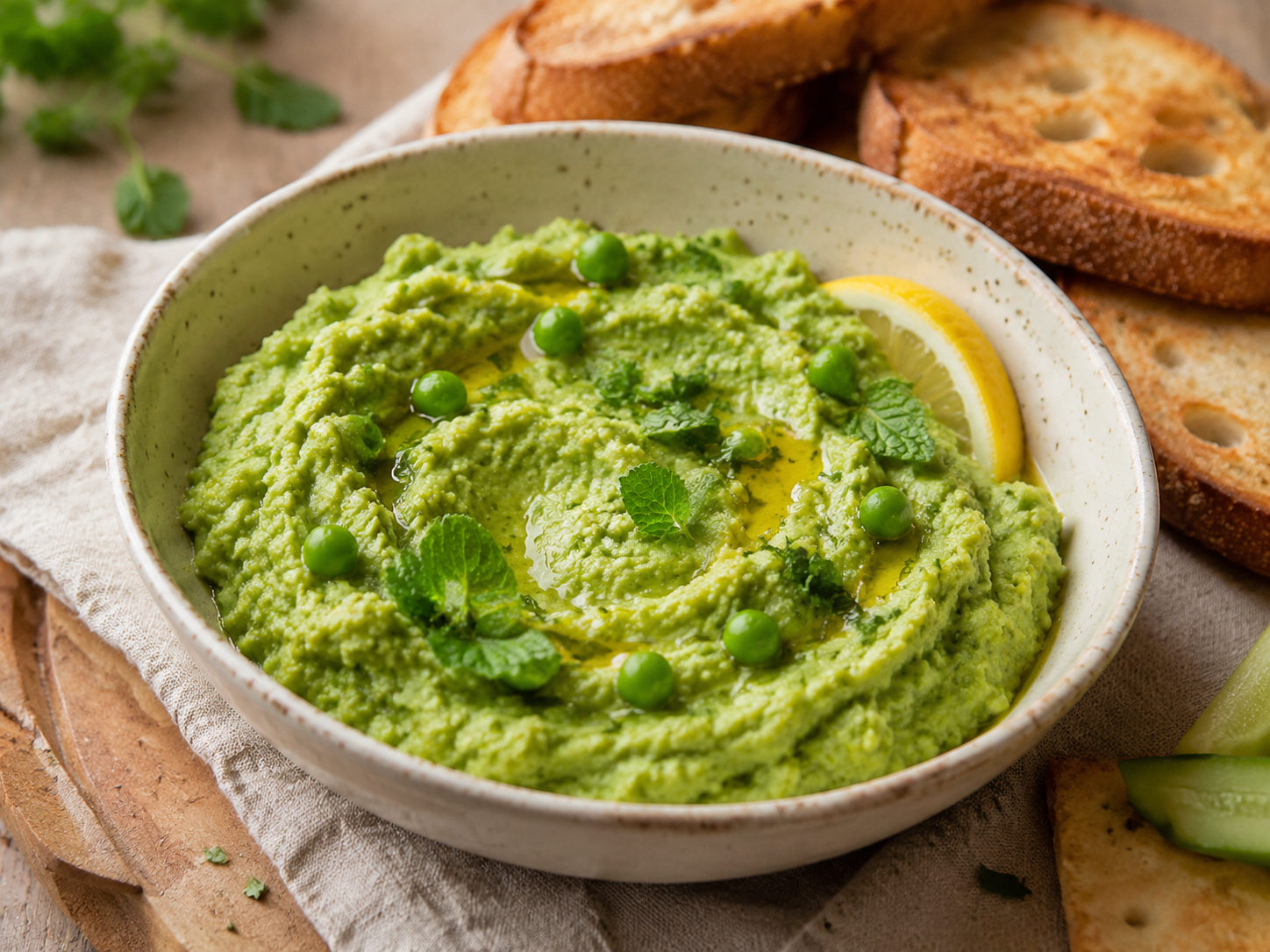
Lemon Herb Pea Spread
A fresh, lightly textured spread for toast, crackers or a garden vegetable tray.
Ingredients
- 3 cups fresh shelled peas or frozen peas
- 1 small garlic clove, roughly chopped
- 2 tablespoons fresh lemon juice
- 1 teaspoon finely grated lemon zest
- 1/4 cup loosely packed fresh mint leaves
- 1/4 cup loosely packed fresh parsley leaves
- 3 tablespoons extra-virgin olive oil
- 1/2 teaspoon salt
- 1/4 teaspoon black pepper
- 2 to 4 tablespoons cold water, as needed
Instructions
- Bring a saucepan of water to a boil. Add the peas and cook for 2 minutes, until tender.
- Drain the peas and rinse them under cold water until cool. Drain thoroughly.
- Add the peas, garlic, lemon juice, lemon zest, mint, parsley, olive oil, salt and pepper to a food processor.
- Pulse until spreadable but still lightly textured, adding cold water one tablespoon at a time as needed.
- Taste and adjust the seasoning. Serve with toasted bread, crackers or fresh vegetables.
Storage note: Cover and refrigerate promptly. Stir before serving; a thin drizzle of olive oil can refresh the surface.
Make-ahead note: Cover the surface directly and refrigerate for up to two days. A small squeeze of lemon before serving refreshes the color and texture.
Georgia Pea Questions
Can peas survive frost in Georgia?
Established garden peas tolerate cool weather, but a hard freeze can damage flowers and tender growth. Planting early is still important because heat is usually the larger limitation on the spring crop.
Do peas need a trellis?
Many compact varieties can grow with minimal support, but vining snap, snow and shelling peas are easier to manage and harvest on netting or fencing.
Can I plant garden peas in fall?
UGA's general home-garden chart does not list a standard fall window for garden peas. Local trials may work in protected sites, but spring remains the reliable recommendation.
Why are my pea vines healthy but not making pods?
Late heat, excess nitrogen, flower damage or moisture stress can reduce pod set. Review planting time first, then check irrigation and fertilizer history.
Research-Based Georgia Resources
This guide uses the planting framework in UGA Cooperative Extension's Home Gardening bulletin. Dates are planning ranges, not guarantees; adjust for current weather, elevation and your local frost pattern.
Open the Georgia Garden Planner · Georgia Planting Calendar · Companion Planting · Harvesting Guides · Garden-to-Kitchen Recipes