Irish potatoes are a cool-season crop, and Georgia gardeners usually plant them in early spring—not in the heat of summer. Successful potato growing starts with the right seed potatoes, loose soil and one technique that deserves special attention: hilling.
Georgia Potato Quick Facts
UGA statewide spring planting window: approximately Jan. 15–Mar. 1.
Days to maturity: about 70–90 days in UGA's current statewide chart.
Planting material: certified seed potatoes rather than ordinary seedlings.
Depth: about 4–5 inches.
UGA-listed cultivars: Red Pontiac, Kennebec, Atlantic and Yukon Gold.
When to Plant Potatoes in Georgia
UGA describes potatoes as an early-spring crop, with a statewide planning window of approximately Jan. 15–Mar. 1. South Georgia generally plants first; Middle Georgia follows; North Georgia gardeners may wait into early March until soil is workable and near the recommended temperature. UGA guidance notes planting can begin around 45°F soil, with emergence better above 50°F. Check the Georgia planting calendar and local forecast rather than forcing seed pieces into cold, saturated soil.
A fall crop is unreliable in much of Georgia because high soil temperatures delay growth and the crop must finish before freezing weather. Treat fall potatoes as a local experiment, not a statewide second planting. For a longer spring harvest, choose cultivars with different maturity dates instead of repeatedly planting into warming soil.
Use Certified Seed Potatoes
Plant small whole certified seed potatoes or cut larger ones into sturdy pieces, each with at least one sound eye. Certified stock reduces the risk of introducing disease compared with random grocery-store potatoes, which may also be treated to inhibit sprouting. Discard pieces showing soft rot or decay.
Best Potato Varieties for Georgia
UGA's statewide chart lists Red Pontiac, Kennebec, Atlantic and Yukon Gold. Home-potato guidance also discusses Red LaSoda, Norchip, Sebago and Irish Cobbler. UGA warns that thick russet-skinned supermarket types generally do not perform well in the South.
How to Plant Potatoes
Plant seed potatoes about 4–5 inches deep with eyes facing upward.
Use loose, well-drained soil and full sun; raised rows help where Georgia clay stays wet.
UGA local guidance suggests rows roughly 24–36 inches apart, with seed pieces around 7–8 inches apart for home gardens.
Keep moisture consistent during growth and tuber formation without saturating the bed.
Use a soil test to guide fertilizer and pH decisions.
What Is Hilling—and Why Does It Matter?
When shoots are several inches tall, pull loose soil around the lower stems without burying the entire plant. Repeat as growth continues so developing tubers remain covered. Light exposure can turn skin green, signaling increased glycoalkaloids. Do not eat green portions of potatoes.
Can Potatoes Grow in Containers?
Yes, but use a large, deep container with excellent drainage and enough volume for repeated hilling. Start with a modest layer of potting mix, add mix as stems grow and keep drainage holes open. Containers dry faster than garden soil and usually produce a smaller crop than a well-prepared row.
When to Harvest and Store Potatoes
For small “new potatoes,” carefully harvest after plants flower. For mature storage potatoes, wait until vines naturally decline and skins have set. Dig gently so tubers are not speared. Cure only sound potatoes, keep them away from light, and store in a cool, dark, ventilated location. Use cut or bruised tubers first. More guidance is available in GA Garden's harvesting guides.
Common Potato Problems in Georgia
Colorado potato beetles, aphids and soil-borne diseases can cause problems. Rotate potatoes and their tomato-family relatives, scout foliage regularly and begin with clean seed. Poor drainage encourages rot, while late-day overhead watering can extend leaf wetness during humid weather.
Grow → Harvest → Cook: Browse potato soups, sides, salads and breakfast ideas in the Georgia Garden Recipe Finder.
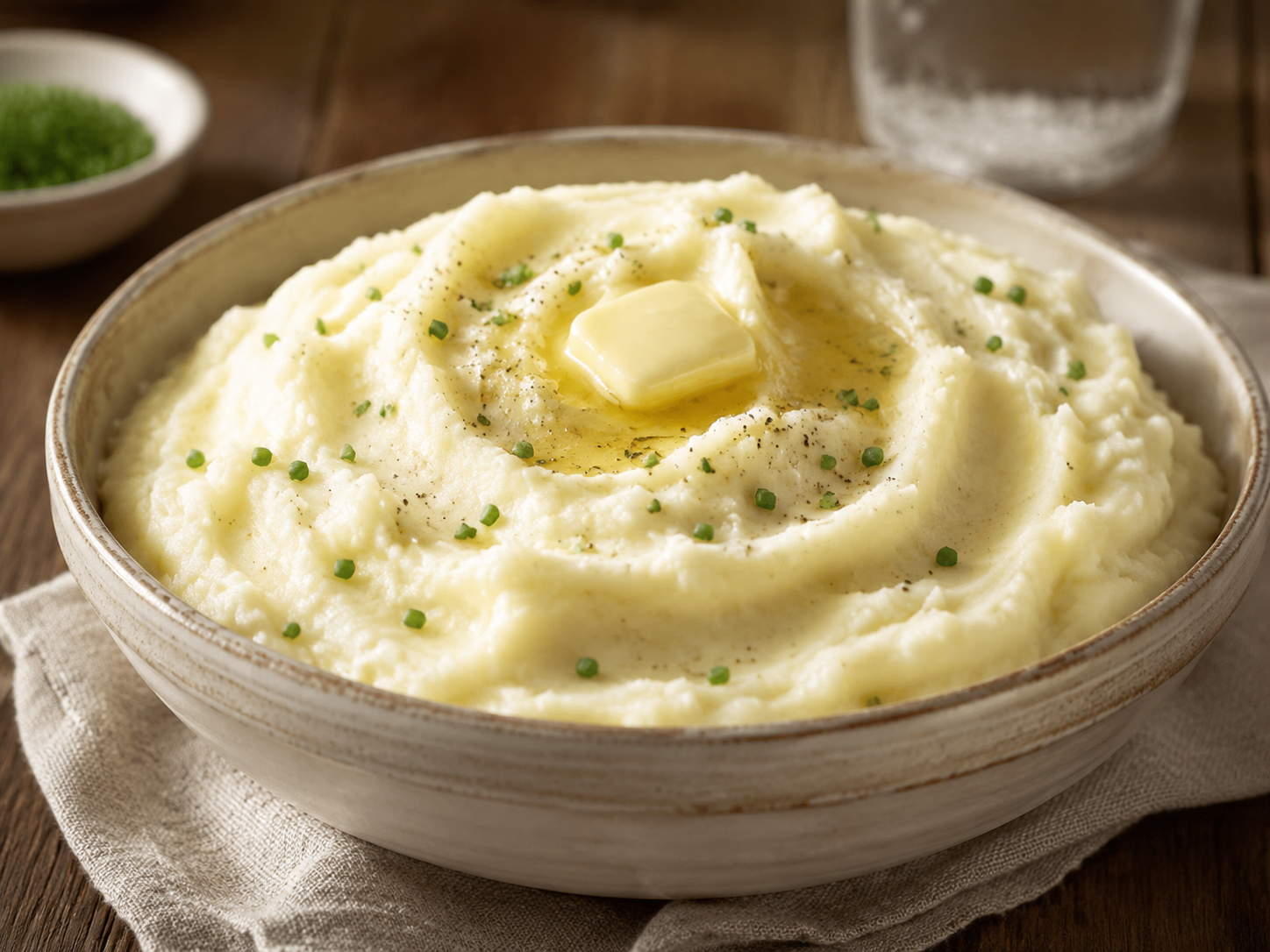
Russet potatoes mashed until smooth with butter, whole milk and simple seasoning.
Yield: 6 servings
Prep: 20 min
Simmer: 20 min
Total Time: 40 min
Ingredients
4 large russet potatoes, peeled and cut into chunks
1/2 cup unsalted butter
1 cup whole milk
Salt and pepper to taste
Chopped fresh chives or parsley for garnish (optional)
Instructions
Place the potato chunks in a large pot and cover with cold water. Add a pinch of salt.
Bring the water to a boil and simmer until the potatoes are fork-tender (15-20 minutes).
Drain the potatoes and return them to the pot.
Mash the potatoes using a potato masher or a ricer.
In a small saucepan, heat the milk and butter until the butter is melted.
Gradually add the milk and butter mixture to the mashed potatoes, stirring until smooth and creamy.
Season with salt and pepper to taste.
Garnish with chopped fresh chives or parsley if desired.
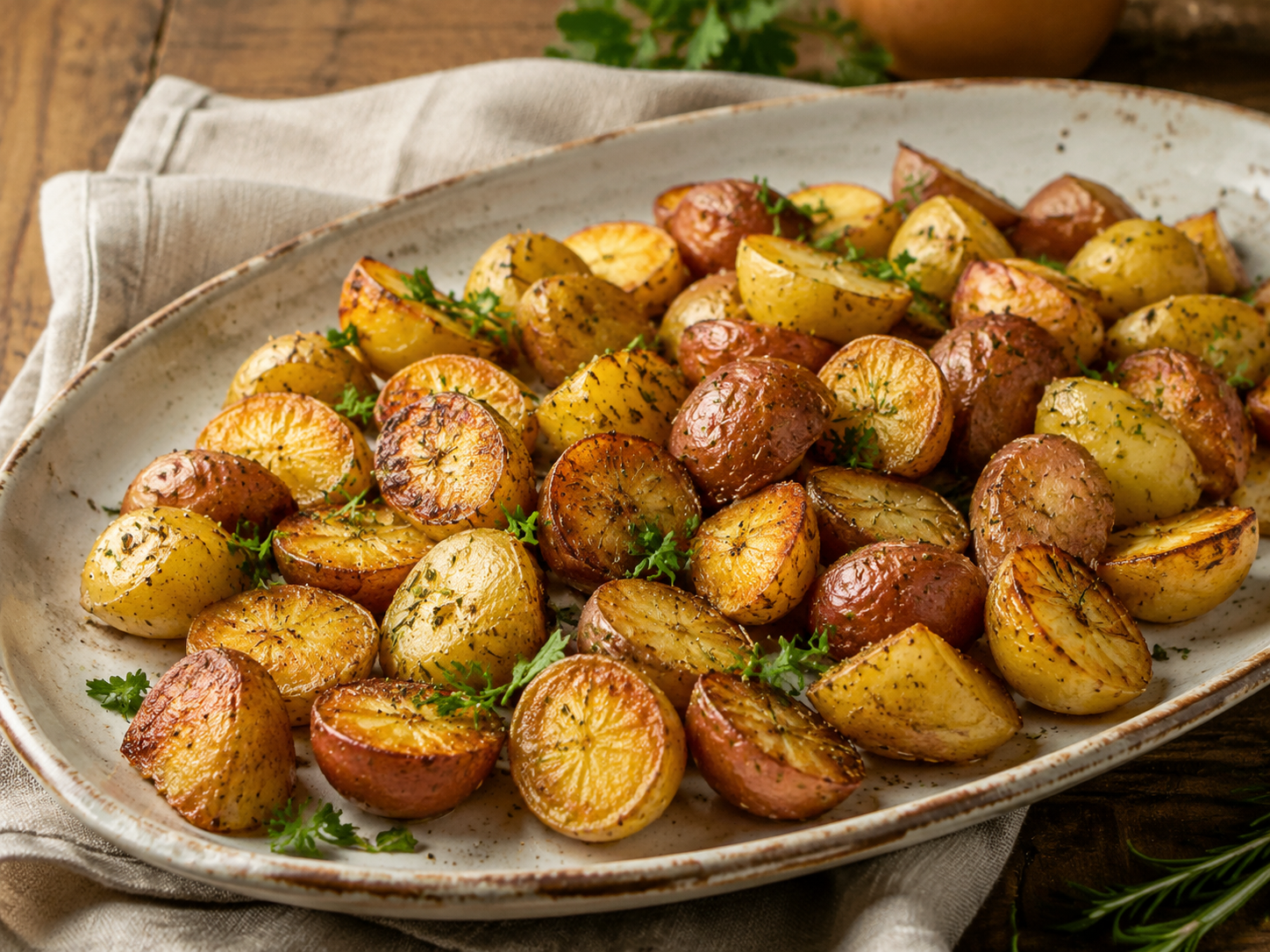
Crispy Roasted Potatoes
Baby potatoes roasted with olive oil, garlic, onion and rosemary until deeply browned.
Yield: 6 servings
Prep: 15 min
Roast: 40 min
Total Time: 55 min
Ingredients
2 lbs baby potatoes (red or Yukon gold), halved or quartered
3 tablespoons olive oil
1 teaspoon garlic powder
1 teaspoon onion powder
1 teaspoon dried rosemary (or 1 tablespoon fresh)
Salt and pepper to taste
Chopped fresh parsley for garnish
Instructions
Preheat the oven to 425°F (220°C).
In a large bowl, toss the halved or quartered potatoes with olive oil, garlic powder, onion powder, dried rosemary, salt, and pepper.
Spread the potatoes in a single layer on a baking sheet.
Roast in the preheated oven for 30-40 minutes or until the potatoes are golden brown and crispy, flipping them halfway through.
Remove from the oven and sprinkle with chopped fresh parsley.
Serve the crispy roasted potatoes as a delicious side dish.
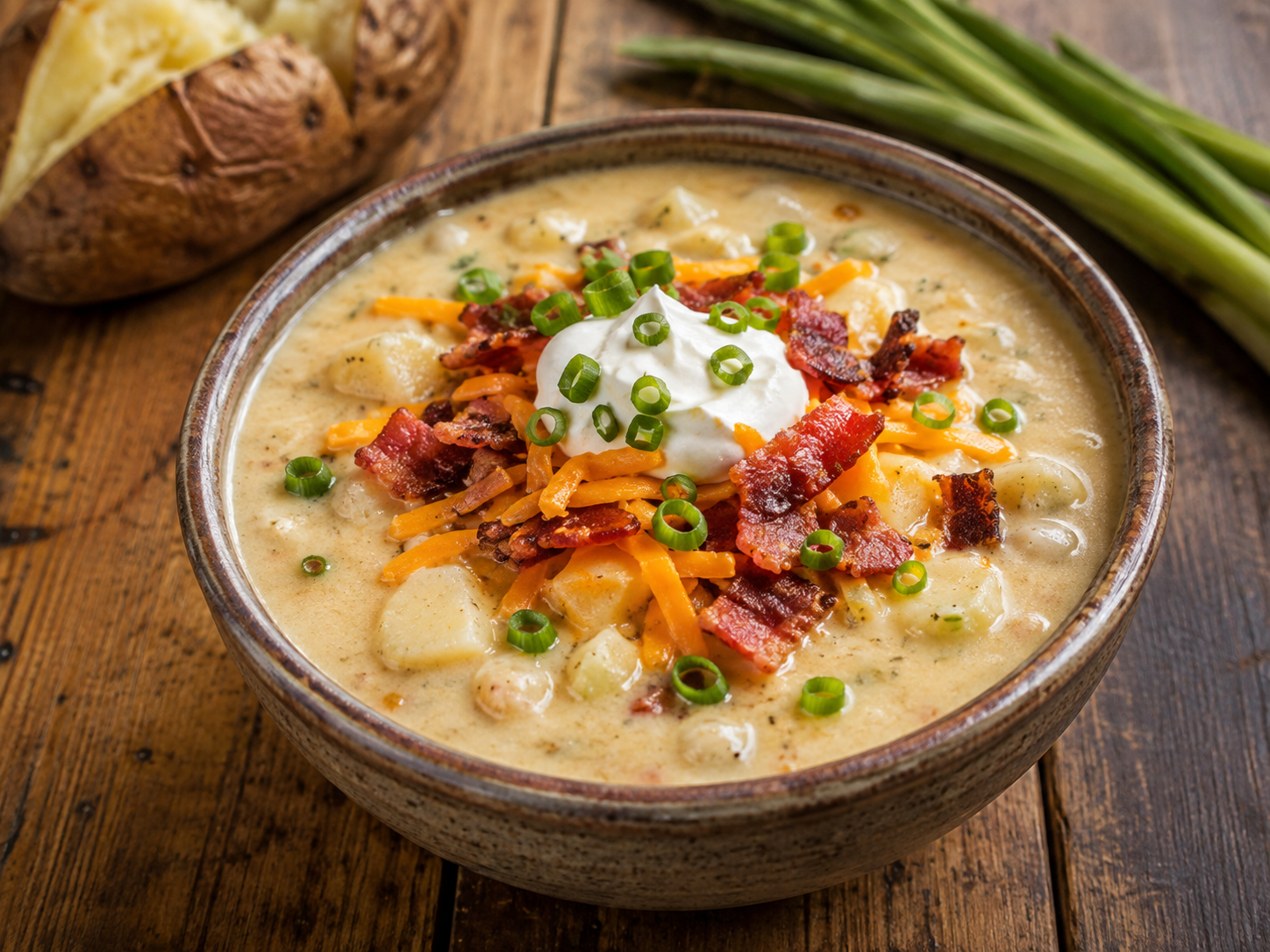
Loaded Baked Potato Soup
Baked potatoes give this soup a fluffy texture and deep potato flavor. Add the toppings at the table so each bowl keeps the familiar contrast of a loaded baked potato.
Yield: 6 servings
Prep: 20 min
Bake: 16 min
Total Time: 36 min
Ingredients
4 large russet potatoes, baked until tender
4 tablespoons unsalted butter
1/3 cup all-purpose flour
4 cups whole milk
2 cups low-sodium chicken broth
1 cup shredded sharp cheddar cheese
1/2 cup sour cream
6 slices bacon, cooked crisp and crumbled
4 green onions, thinly sliced
1 teaspoon kosher salt, plus more to taste
1/2 teaspoon black pepper
Instructions
When the baked potatoes are cool enough to handle, scoop out the flesh and cut it into bite-size pieces.
Melt the butter in a large pot over medium heat. Whisk in the flour and cook for 1 minute.
Gradually whisk in the milk and broth. Simmer, whisking often, until slightly thickened, about 5 minutes.
Add the potato, salt and pepper. Simmer gently for 10 minutes, stirring occasionally.
Remove the pot from the heat. Stir in the cheddar and sour cream until smooth.
Divide among bowls and top with the bacon and green onions.
Garden kitchen note: Do not boil the soup after adding the sour cream. Refrigerate leftovers within 2 hours and use within 3 days; reheat gently.
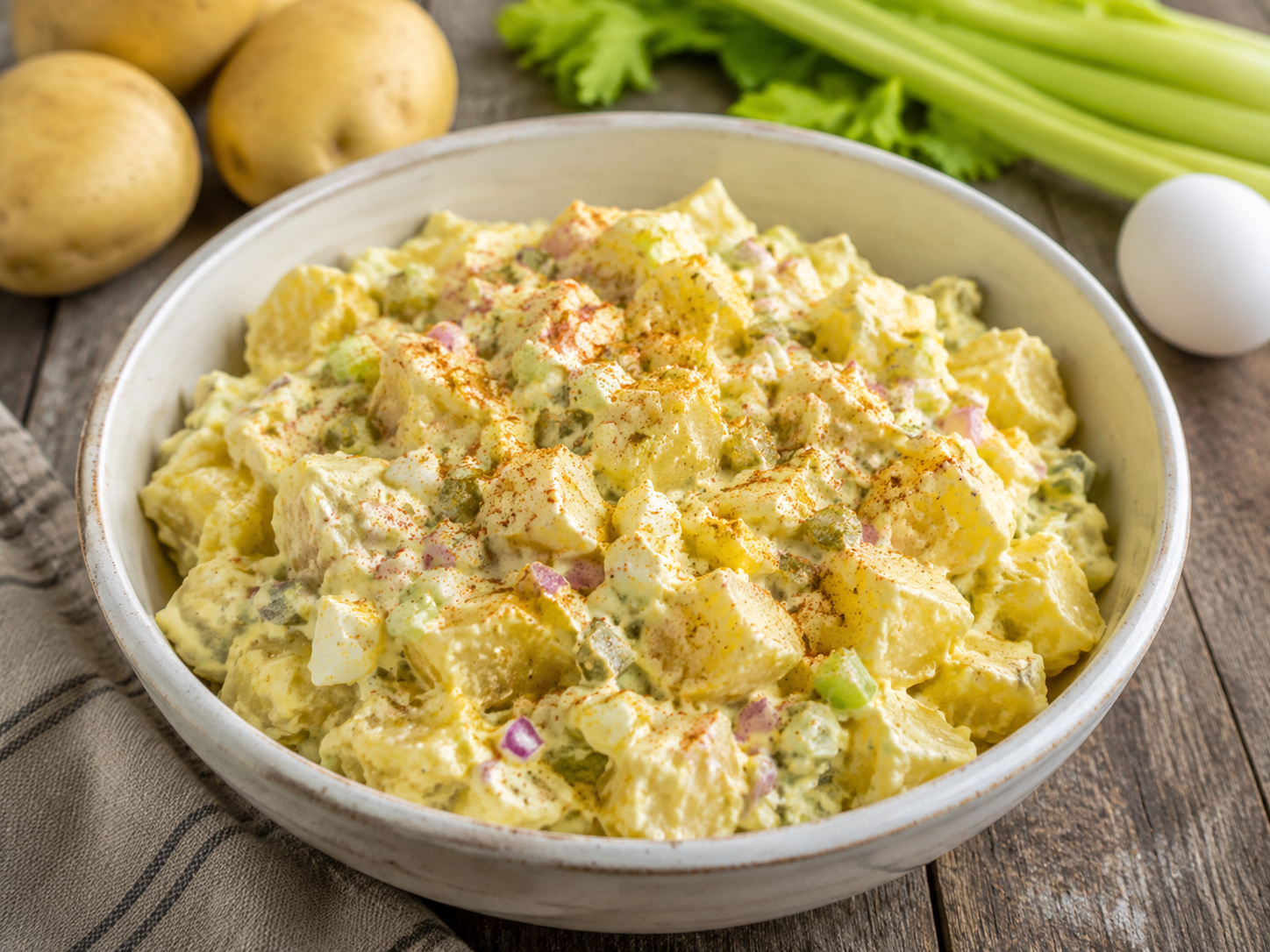
Southern Garden Potato Salad
This make-ahead salad balances tender potatoes and eggs with crisp celery, pickles and a mustard dressing. Dress the potatoes while they are slightly warm so they take on more flavor.
Yield: 8 servings
Prep: 25 min
Chill: 2 hr
Total Time: 2 hr 47 min
Ingredients
3 pounds Yukon Gold potatoes, cut into 1-inch pieces
3 large hard-boiled eggs, chopped
3/4 cup mayonnaise
2 tablespoons yellow mustard
2 celery stalks, finely chopped
1/3 cup chopped dill pickles
1/4 cup finely chopped red onion
1/2 teaspoon sweet paprika, plus more for serving
1 teaspoon kosher salt
1/2 teaspoon black pepper
Instructions
Place the potatoes in a large pot, cover with cold water and add a generous pinch of salt. Bring to a boil, then simmer for 10 to 12 minutes, until fork-tender.
Drain the potatoes well and let them cool for 10 minutes.
Whisk the mayonnaise, mustard, paprika, salt and pepper in a large bowl.
Fold in the warm potatoes, eggs, celery, pickles and red onion until evenly coated.
Cover and refrigerate for at least 2 hours. Dust lightly with paprika before serving.
Garden kitchen note: Keep potato salad chilled; do not leave it at room temperature for more than 2 hours, or more than 1 hour above 90°F. Use within 3 days.
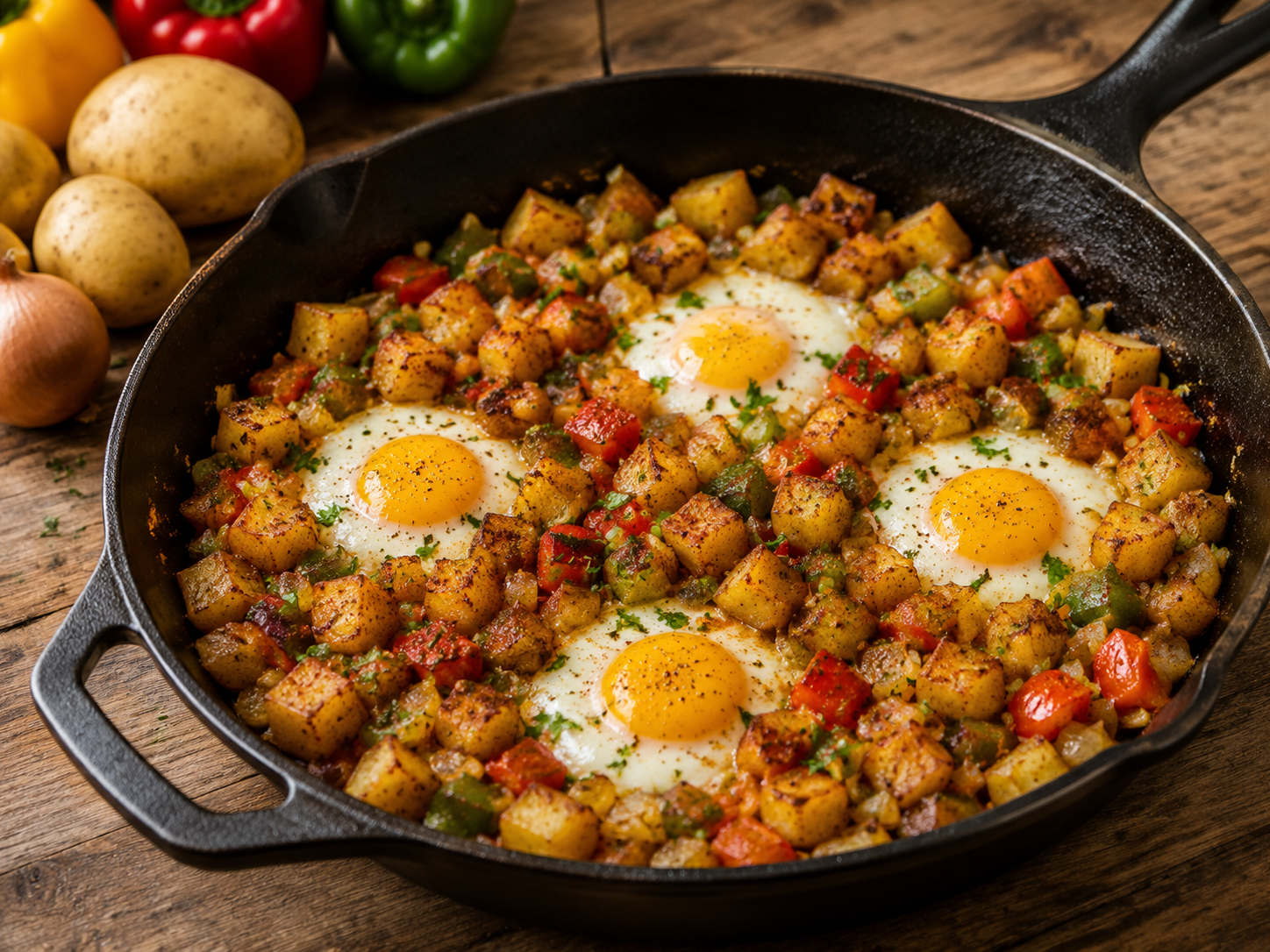
Skillet Potato and Pepper Breakfast Hash
This one-skillet breakfast combines garden peppers with crisp-edged potatoes and eggs. Cutting the potatoes into even small cubes helps them brown and cook through at the same rate.
Yield: 4 servings
Prep: 20 min
Bake: 29 min
Total Time: 49 min
Ingredients
1 1/2 pounds Yukon Gold potatoes, cut into 1/2-inch cubes
1 red bell pepper, diced
1 green bell pepper, diced
1 yellow onion, diced
3 tablespoons olive oil
1 teaspoon smoked paprika
1/2 teaspoon garlic powder
4 large eggs
1 teaspoon kosher salt
1/2 teaspoon black pepper
2 tablespoons chopped fresh parsley
Instructions
Heat the oven to 400°F.
Heat the olive oil in a large oven-safe skillet over medium heat. Add the potatoes, cover and cook for 10 minutes, stirring twice.
Add the bell peppers, onion, smoked paprika, garlic powder, salt and pepper. Cook uncovered for 8 to 10 minutes, stirring occasionally, until the potatoes are browned and tender.
Make four wells in the hash and crack one egg into each well.
Transfer the skillet to the oven and bake for 6 to 9 minutes, until the egg whites are set and the yolks are cooked to your preference.
Sprinkle with parsley and serve from the skillet.
Garden kitchen note: For food safety, cook eggs until the whites and yolks reach your preferred safe doneness. Refrigerate leftovers within 2 hours and use within 3 days.