North Georgia
Use approximately April 15–June 15, about two weeks later than Middle Georgia.
Georgia sweet-pepper growing guide
Sweet peppers need warm soil, full sun, steady moisture and enough season to move from green fruit to mature color—without duplicating the dedicated hot-pepper guide.
Warm-season essentials at a glance
Set healthy transplants after frost danger; peppers are not a cold-soil crop.
Give plants full sun while protecting fruit with a healthy leaf canopy.
Keep moisture reasonably even to reduce stress and calcium-uptake problems.
Pick sweet peppers green or allow them to reach their mature cultivar color.
PLANT BY REGION
Plant only after frost danger when soil and nighttime conditions support warm-season growth.
Use approximately April 15–June 15, about two weeks later than Middle Georgia.
Use April 1–June 1.
Use approximately March 18–May 18, about two weeks earlier than Middle Georgia.
These windows apply UGA’s published two-week spring regional adjustment to its pepper row in the UGA Home Gardening planting chart.
Choose fruit shape and kitchen use
Blocky fruits can be harvested green or left to mature to their cultivar's final color.
These elongated peppers range from sweet to pungent, so read the cultivar description rather than judging by shape alone.
Long, thin-walled and other sweet types broaden the harvest without turning this page into the separate hot-pepper guide.
Build roots before summer extremes
Use fertile, well-drained soil and a soil test rather than guessing at amendments.
UGA's chart uses about 1½–2 feet between plants in 2½-foot rows.
Mulch after soil warms to buffer moisture and limit soil splash.
Stake or cage plants when heavy fruit or weather could bend branches.
Warm-weather peppers can still drop flowers during temperature extremes.
Protect the root zone with steady moisture and avoid assuming more fertilizer will fix weather-related fruit-set interruptions. Healthy plants can resume setting fruit when conditions improve.
Protect fruit quality without guessing
Dark tissue at the blossom end reflects disrupted calcium uptake, often associated with uneven moisture—not simply a need to add calcium.
Fruit exposed after canopy loss can develop pale, damaged areas. Preserve healthy foliage and avoid unnecessary heavy pruning.
Scout for aphids, flea beetles and disease symptoms. Maintain airflow, rotate away from other nightshades and identify problems before treatment.
Peppers are largely self-pollinating. Companion choices should preserve sun, airflow and root space; tomatoes, eggplant and potatoes are not a true rotation because all are nightshades.
Green fruit can be mature enough to eat
Harvest firm, usable peppers green or wait for the cultivar's mature color and fuller flavor. Cut fruit rather than twisting brittle branches, and pick repeatedly to keep the crop moving.
Grow → Harvest → Cook: Carry sweet peppers into the protected recipes below, then browse the Georgia Garden Recipe Finder.
From Georgia garden to kitchen
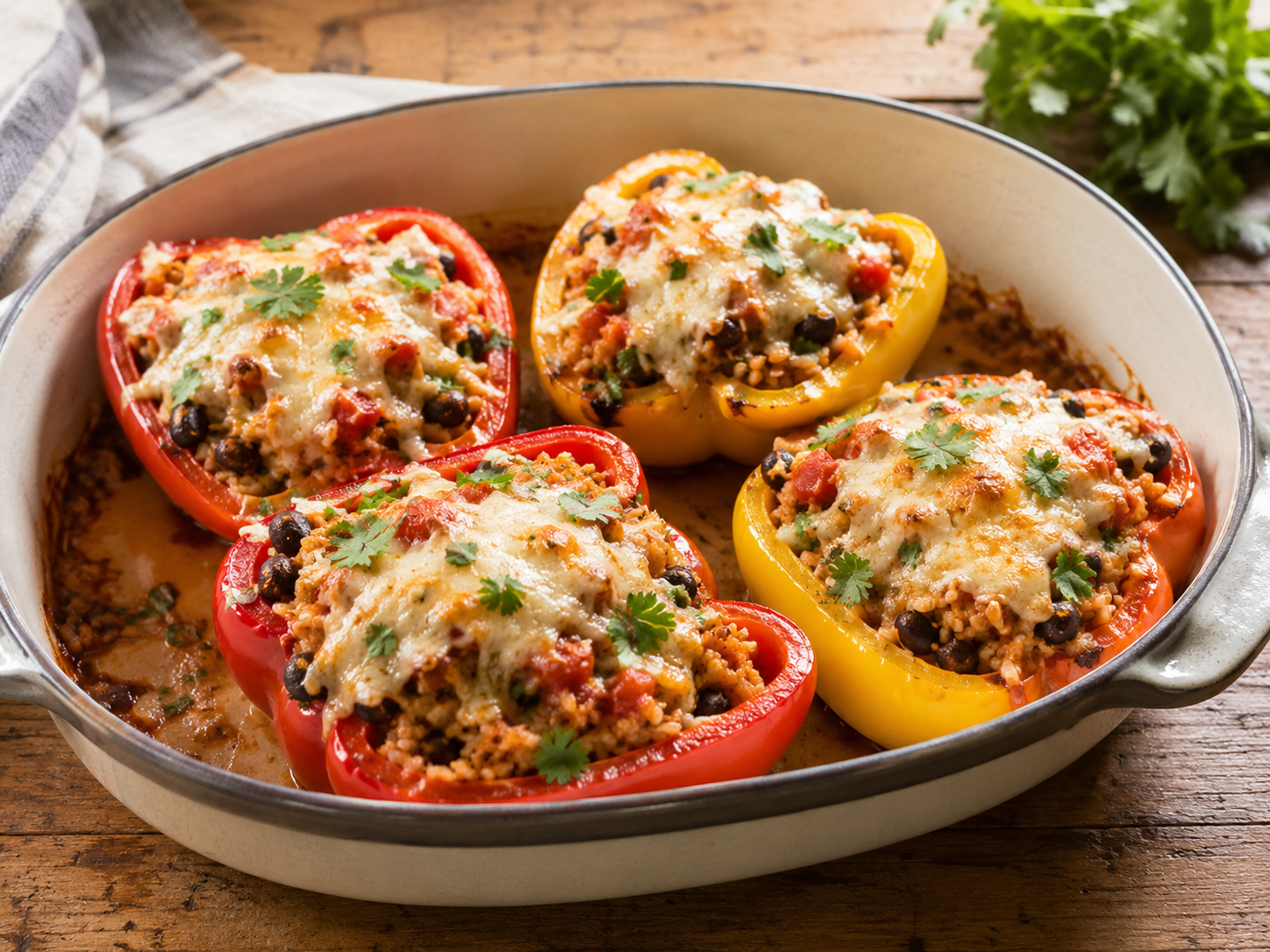
Bell pepper halves packed with seasoned meat, rice, sautéed onion, garlic, tomatoes and cheddar.
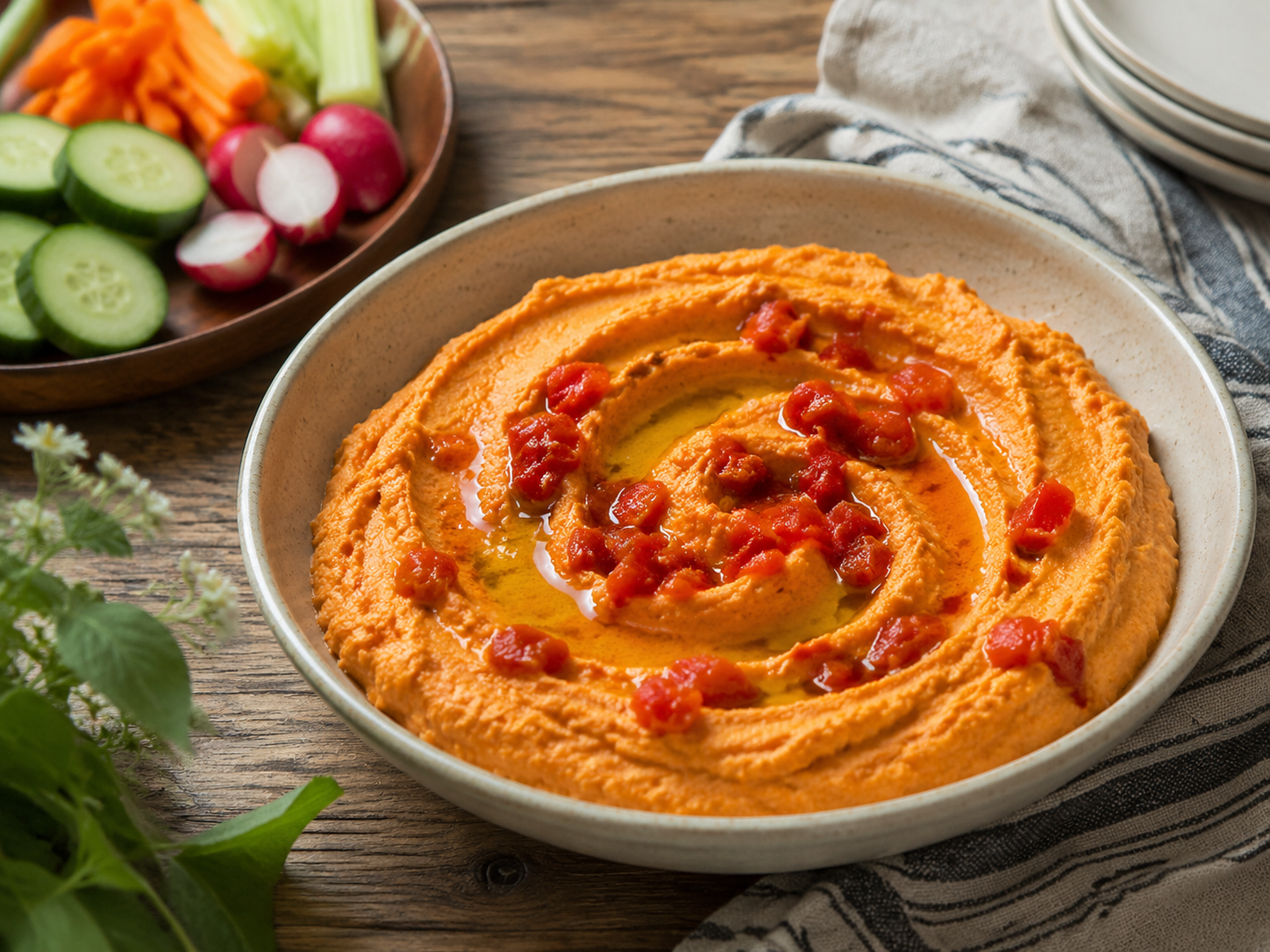
Chickpea hummus blended with roasted red peppers, tahini, garlic and olive oil.
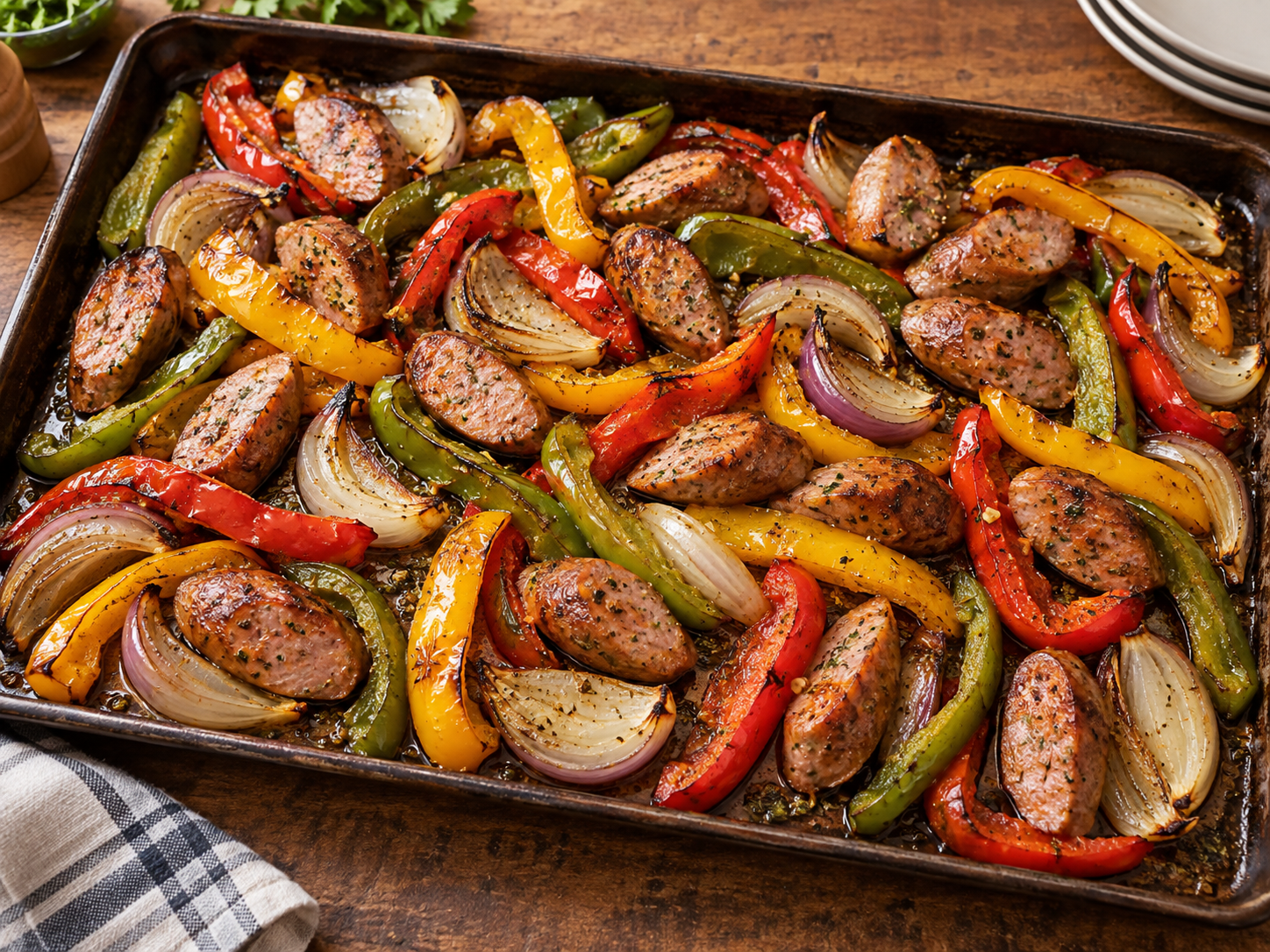
Colorful garden peppers and onions roast alongside Italian sausage for an easy, caramelized sheet-pan supper.
Garden note: Avoid crowding the pan. Divide the mixture between two pans if necessary so the vegetables roast instead of steaming.
Continue your Georgia garden
Continue with hot peppers, tomatoes, eggplant, Companion Planting and Harvesting Guides.