Georgia is grape country—but choosing the right grape matters. Muscadines are native to the Southeast and well adapted to Georgia heat and humidity, while bunch grapes require more careful cultivar selection and disease management.
Georgia Grape Quick Facts
Major home-garden choice: muscadine or bunch grape.
Light: full sun.
Structure: a permanent trellis installed before planting.
Annual job: dormant pruning is essential.
Georgia challenge: humidity and disease pressure make cultivar selection especially important.
Muscadines or Bunch Grapes?
Muscadines are native to the Southeast and generally handle Georgia heat and humidity better than many traditional bunch grapes. Bronze-fruited muscadines are often called scuppernongs, although Scuppernong is also a historic cultivar. Bunch grapes can succeed, especially in favorable North Georgia sites, but gardeners should choose cultivars recommended for their region and disease pressure rather than planting a supermarket type by assumption.
Choose a Cultivar That Fits Your Georgia Site
North, Middle and South Georgia differ in winter chilling, heat accumulation and disease pressure. Muscadine cultivars also differ in flower type: some are self-fertile, while female cultivars need a self-fertile pollen source flowering nearby. Bunch-grape pollination requirements vary by cultivar. Confirm both regional adaptation and pollination needs before buying vines.
Planting and Trellising Grapes
Choose full sun, good air movement and well-drained soil. Avoid low pockets where cold air and water settle. Prepare Georgia clay based on a soil test and correct drainage across the planting area rather than filling one hole with loose amendments. Install the permanent trellis first, then space vines according to the training system and cultivar vigor.
Training a Young Vine
During establishment, select a strong shoot for the trunk and guide it to the trellis wire. Once it reaches the wire, develop permanent arms in the directions required by the chosen system. Remove competing shoots while they are small. A clear trunk-and-cordon framework makes later pruning, spraying and harvest safer and easier.
Why Annual Dormant Pruning Is Essential
Grapes fruit on new shoots arising from one-year-old wood. Each winter, prune to leave the correct amount of fruiting wood for the cultivar and training system. An unpruned vine may look vigorous but becomes shaded and tangled, with poor airflow and uneven fruit. Muscadines and bunch grapes are not pruned identically, so follow the system recommended for the grape you planted.
Water, Fertility and Georgia Humidity
Water new vines deeply during dry weather while roots establish. Mature vines still need moisture during shoot growth and fruit development, but saturated soil encourages root problems. Use a soil test before fertilizing; excess nitrogen produces dense growth that dries slowly. Keep the vine row weed-managed and the canopy open so leaves and clusters dry after rain.
Companion Planting Around Grapevines
Keep the immediate vine row open enough for pruning, airflow and harvest. Low-growing flowers or herbs can provide insect habitat outside the main root and cultivation zone, but do not let companions climb the trellis or trap moisture around trunks. See the GA Garden companion planting guide for practical placement principles.
Common Grape Problems in Georgia
Black rot, downy mildew, powdery mildew and fruit rots can be serious in humid weather; birds, Japanese beetles and other pests may also reduce a crop. Start with adapted cultivars, prune for light and airflow, remove mummified fruit and diseased debris, and scout before symptoms spread. Identify the problem before selecting a treatment and follow current label directions.
Harvesting and Storing Georgia Grapes
Color alone does not guarantee ripeness because grapes do not improve after picking. Taste fruit and learn the normal mature color, sweetness and texture of the cultivar. Muscadines may ripen individually rather than as a uniform cluster. Harvest dry fruit gently, refrigerate promptly and leave washing until shortly before use. More handling guidance is available in GA Garden's harvesting guides.
Grow → Harvest → Cook: Use ripe grapes in crostini, chicken salad, jelly or juice, or browse all crops in the Georgia Garden Recipe Finder.
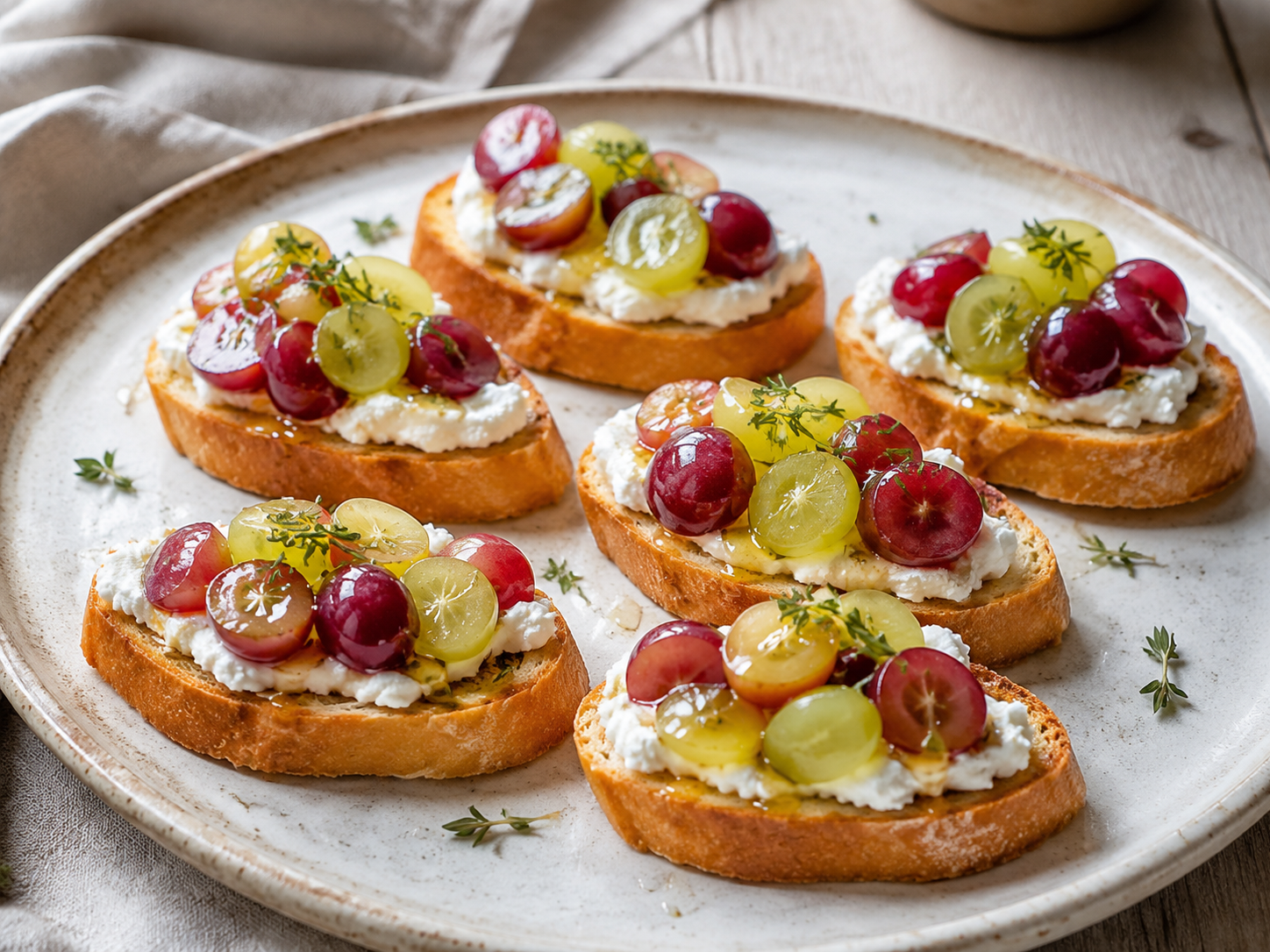
Toasted baguette slices topped with goat cheese, red and green grapes, honey and fresh thyme.
Yield: 12 crostini
Prep: 10 min
Toast: 8 min
Total Time: 18 min
Ingredients
Baguette slices
Red and green grapes, halved
Goat cheese
Honey
Fresh thyme
Instructions
Toast baguette slices until golden brown.
Spread goat cheese on each slice.
Top with halved grapes.
Drizzle honey over the top and garnish with fresh thyme.
Grape and Chicken Salad
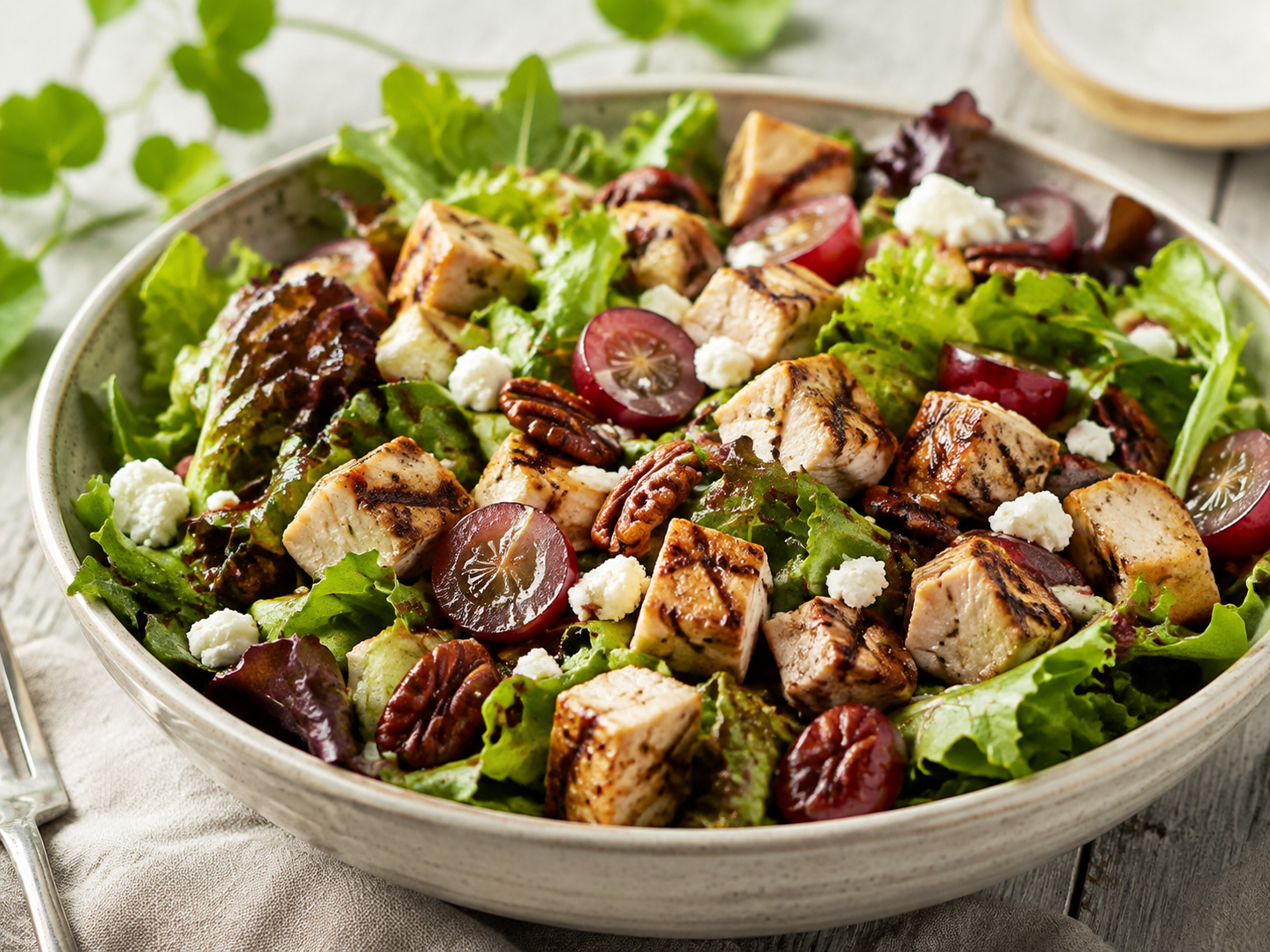
Grilled chicken, sweet grapes, toasted pecans and feta served over mixed greens.
Yield: 6 servings
Prep: 15 min
Mix: 5 min
Total Time: 20 min
Ingredients
Grilled chicken breast, diced
Mixed salad greens
Red grapes, halved
Pecans, toasted
Feta cheese, crumbled
Balsamic vinaigrette
Instructions
In a large bowl, combine salad greens, diced chicken, halved grapes, toasted pecans, and crumbled feta.
Toss the salad with balsamic vinaigrette until well coated.
Serve immediately as a refreshing and satisfying salad.
More Grapes Recipes
Small-Batch Grape Jelly
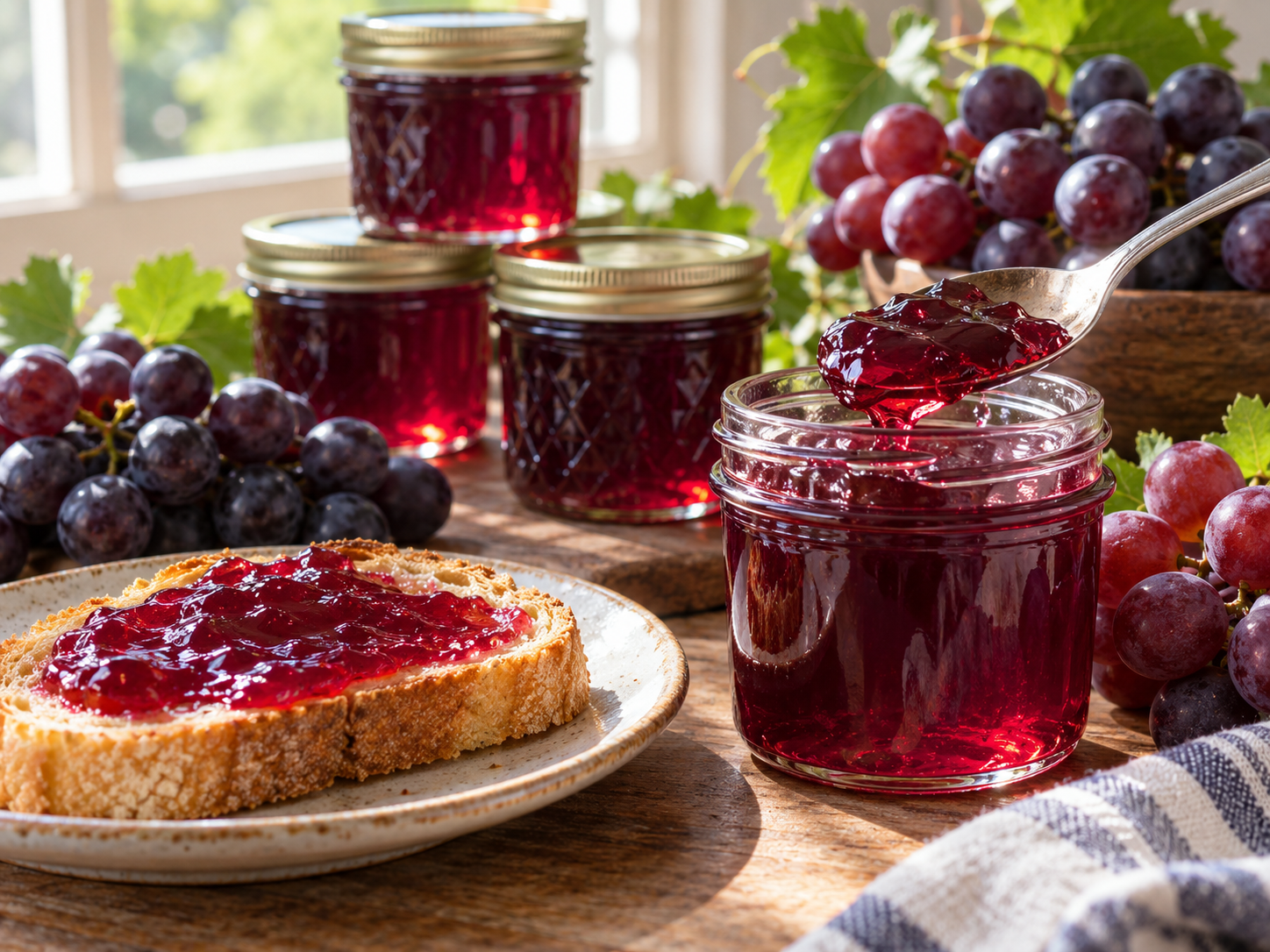
Standard bunch grapes are cooked, strained and set as a clear jewel-toned jelly rather than a whole-fruit jam or muscadine preserve.
Yield: About 5 half-pint jars
Prep: 10 min
Simmer: 10 min
Total Time: 21 min
Ingredients
3 1/2 pounds ripe purple or red bunch grapes, stemmed
1/2 cup water
1 box (1.75 ounces) regular powdered fruit pectin
4 1/2 cups granulated sugar
1 tablespoon fresh lemon juice
Instructions
Crush the grapes in a large nonreactive pot. Add the water, bring to a simmer and cook for 10 minutes, crushing occasionally, until the fruit releases its juice.
Pour the grapes into a damp jelly bag or a fine-mesh strainer lined with several layers of cheesecloth. Let the juice drip without pressing until you have 3 cups.
Combine exactly 3 cups strained grape juice, the pectin and lemon juice in a clean large pot. Bring to a full rolling boil over high heat, stirring constantly.
Add all the sugar at once. Return to a full rolling boil and boil hard for 1 minute, stirring constantly.
Remove from the heat, skim any foam and ladle into clean heat-safe jars, leaving room for expansion if freezing. Cool, cover and refrigerate until set.
Recipe note: This formulation is for refrigerator or freezer storage, not shelf-stable canning. Refrigerate for up to 1 month or freeze for up to 6 months.
Homemade Garden Grape Juice
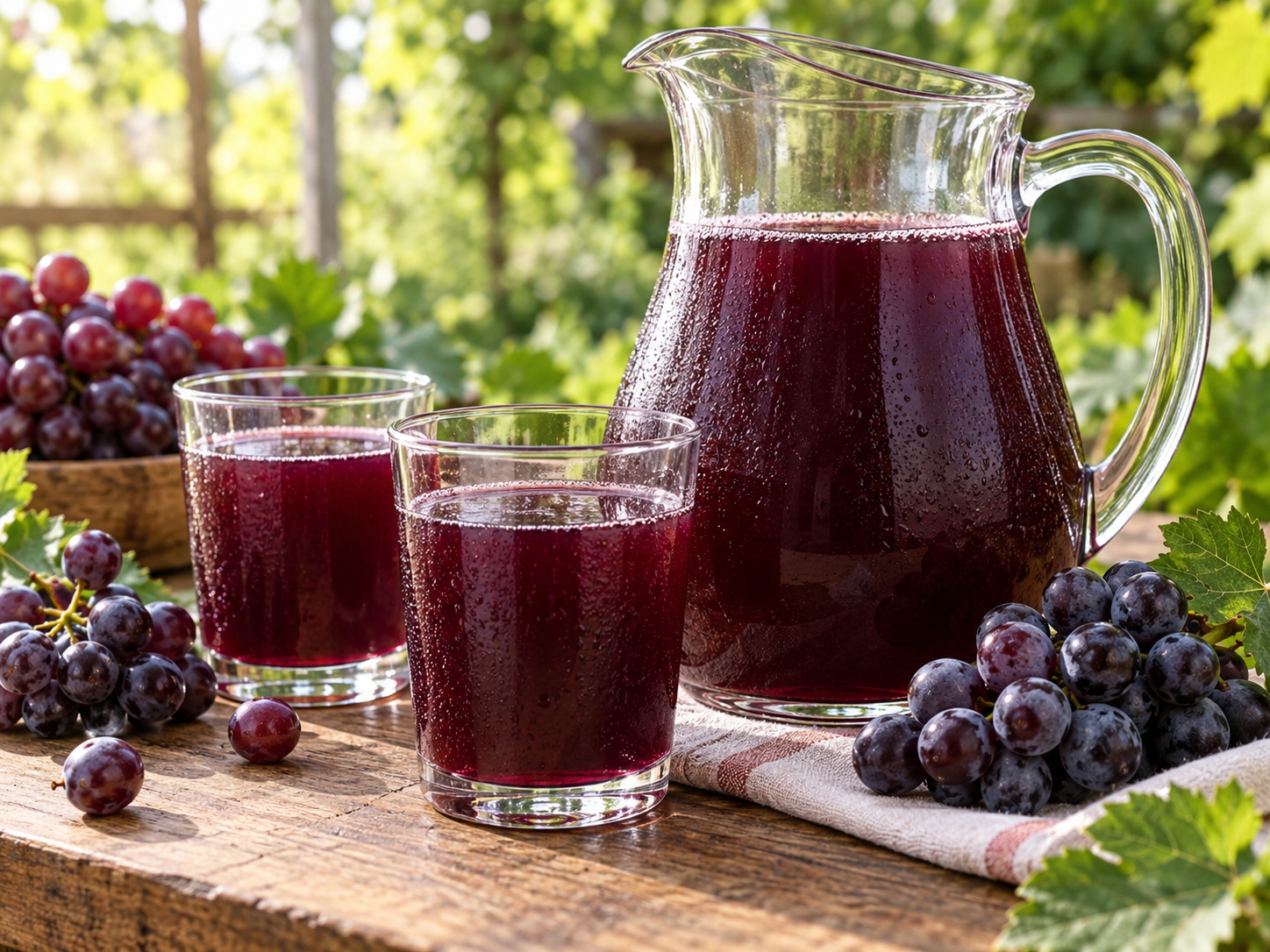
Ripe garden grapes are gently cooked and strained into a clean, full-flavored juice that can be sweetened only as much as the harvest requires.
Yield: About 2 quarts
Prep: 10 min
Simmer: 15 min
Total Time: 1 hr 25 min
Ingredients
4 pounds ripe red or purple bunch grapes, stemmed and rinsed
5 cups water
1/4 to 1/2 cup granulated sugar, depending on the grapes
2 tablespoons fresh lemon juice
Instructions
Place the grapes and water in a large nonreactive pot. Crush the grapes lightly with a potato masher.
Bring to a gentle simmer and cook for 15 minutes, stirring and crushing occasionally, until the skins split and the juice becomes deeply colored.
Pour through a damp jelly bag or a cheesecloth-lined fine-mesh strainer. Let drip for at least 1 hour without pressing for the clearest juice.
Return the strained juice to the clean pot. Stir in 1/4 cup sugar and the lemon juice, warm gently and taste. Add more sugar only if needed.
Cool, transfer to covered bottles or a pitcher and refrigerate until thoroughly chilled.
Recipe note: Natural sediment may settle during storage; pour gently or shake before serving. Refrigerate and use within 5 days.