Mountain and colder sites
Severe winter cold can limit production. Favor cold-tolerant cultivars and protected sites, and recognize that performance may be less dependable.
Georgia native-grape growing guide
Muscadines are deeply tied to Georgia foodways and thrive best where full sun, drainage, a permanent trellis and cultivar choices fit the site.
A long-lived vine with Georgia roots
Best adapted to Georgia's Piedmont and Coastal Plain.
Choose full sun and avoid sites that hold standing water.
Plan a permanent trellis with about 20 feet of row per vine.
Prune annually in late winter to renew fruiting growth.
Statewide establishment guidance
Establish dormant vines in late winter or early spring, before active growth, in full sun with excellent drainage and the trellis already planned.
The authoritative source supports statewide establishment timing and regional suitability—not three separate North, Middle and South planting-date windows.
Match cultivar and site to Georgia conditions
Severe winter cold can limit production. Favor cold-tolerant cultivars and protected sites, and recognize that performance may be less dependable.
Muscadines are well adapted through the Piedmont when vines receive full sun, good drainage and enough permanent trellis space.
Muscadines are also well adapted to the Coastal Plain. Airflow, sanitation and a practical training system matter under greater disease pressure.
Regional suitability follows UGA Extension's Home Garden Muscadines; it should not be read as a set of invented regional planting dates.
Flower type controls whether one vine is enough
Perfect-flowered, or self-fertile, cultivars produce pollen and can set fruit on their own. Carlos, Noble and Nesbitt are examples in UGA's cultivar table.
Female cultivars such as Fry and Summit produce no pollen. Plant a compatible perfect-flowered cultivar nearby for dependable fruit set.
Choose for use, color, hardiness and flower type
Both are productive perfect-flowered cultivars. Carlos is bronze; Noble is black. UGA lists both primarily for juice and wine use.
Nesbitt is a black, perfect-flowered fresh-market cultivar with good cold tolerance.
These bronze female cultivars need pollen from a perfect-flowered vine. Summit offers good winter hardiness and more disease resistance than Fry.
Build the structure before the vine fills it
Use a strong trellis designed for a long-lived, vigorous vine.
Allow roughly 20 feet of trellis per vine.
Prune in February or early March before spring growth.
Fruit develops on new shoots arising from the previous season's growth.
Airflow, sanitation and scouting protect the crop
Ripe rot, bitter rot, black rot and leaf spots can increase where canopies stay dense and wet. Pruning and sanitation help reduce pressure.
Scout leaves, shoots and fruit for insects or mites, then identify the cause before treating.
Birds and other wildlife may take ripe fruit. Timely harvest and physical exclusion are the most direct responses.
Keep the vine row open
Keep the root zone and trellis line clear enough for pruning, harvest and airflow. Low, noncompetitive flowers can be placed beyond the immediate vine row where they do not crowd trunks or interfere with equipment.
Harvest fully colored, flavorful fruit
Pick muscadines as individual berries reach full color and flavor; a cluster may not ripen all at once. Use fresh-market cultivars for eating and productive juice types for preserves, juice or wine according to their best qualities.
Grow → Harvest → Cook: Carry Georgia's native grape into the protected recipes below, then browse the complete Georgia Garden Recipe Finder.
From Georgia vines to the kitchen
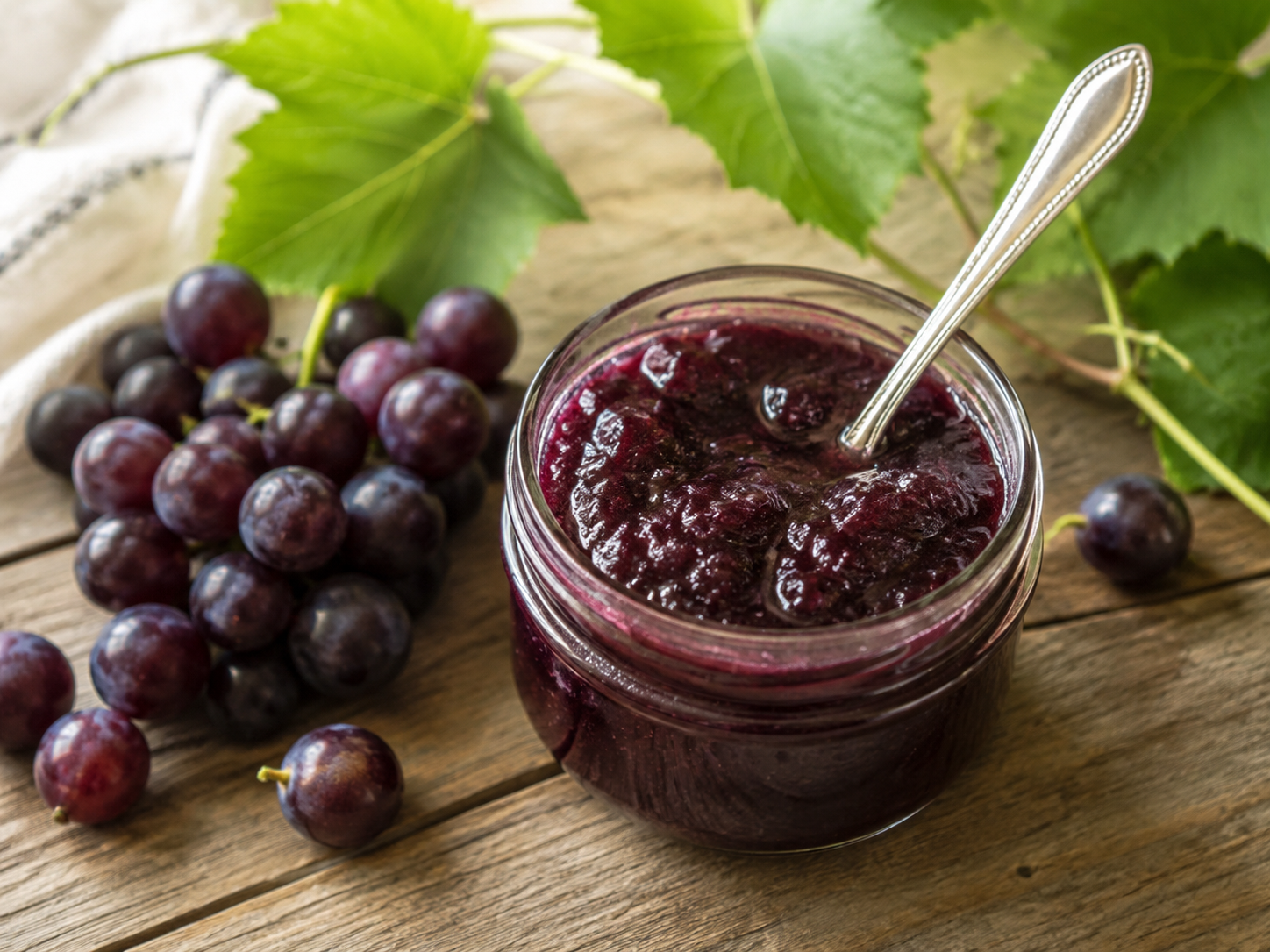
Georgia muscadines cooked with sugar and lemon into a richly colored homemade jam.
Storage note: Cool, cover and refrigerate this small batch, or freeze it in a freezer-safe container. Shelf-stable water-bath canning requires a current tested muscadine jam process.
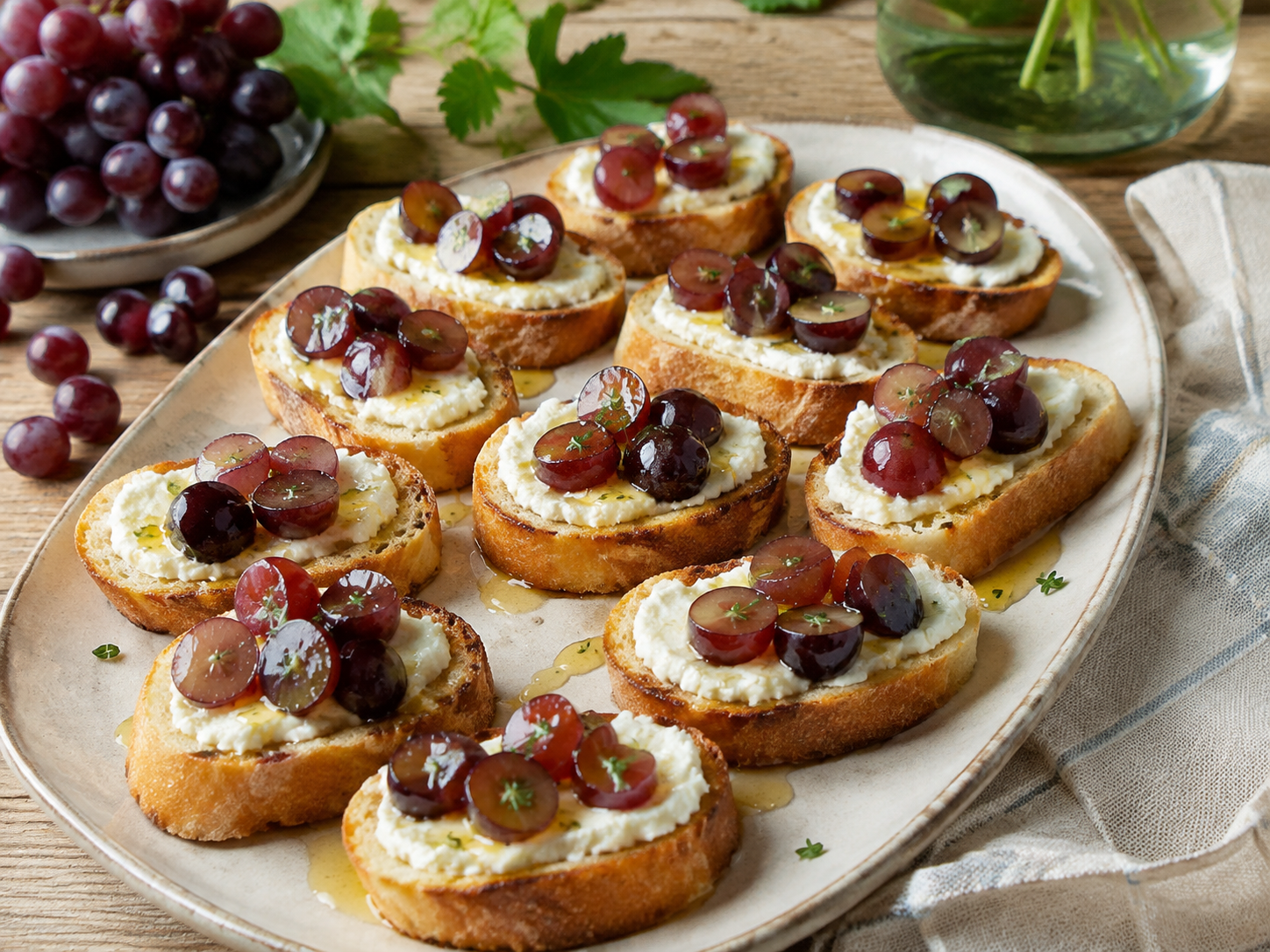
Toasted baguette topped with goat cheese, juicy muscadines, honey and fresh thyme.
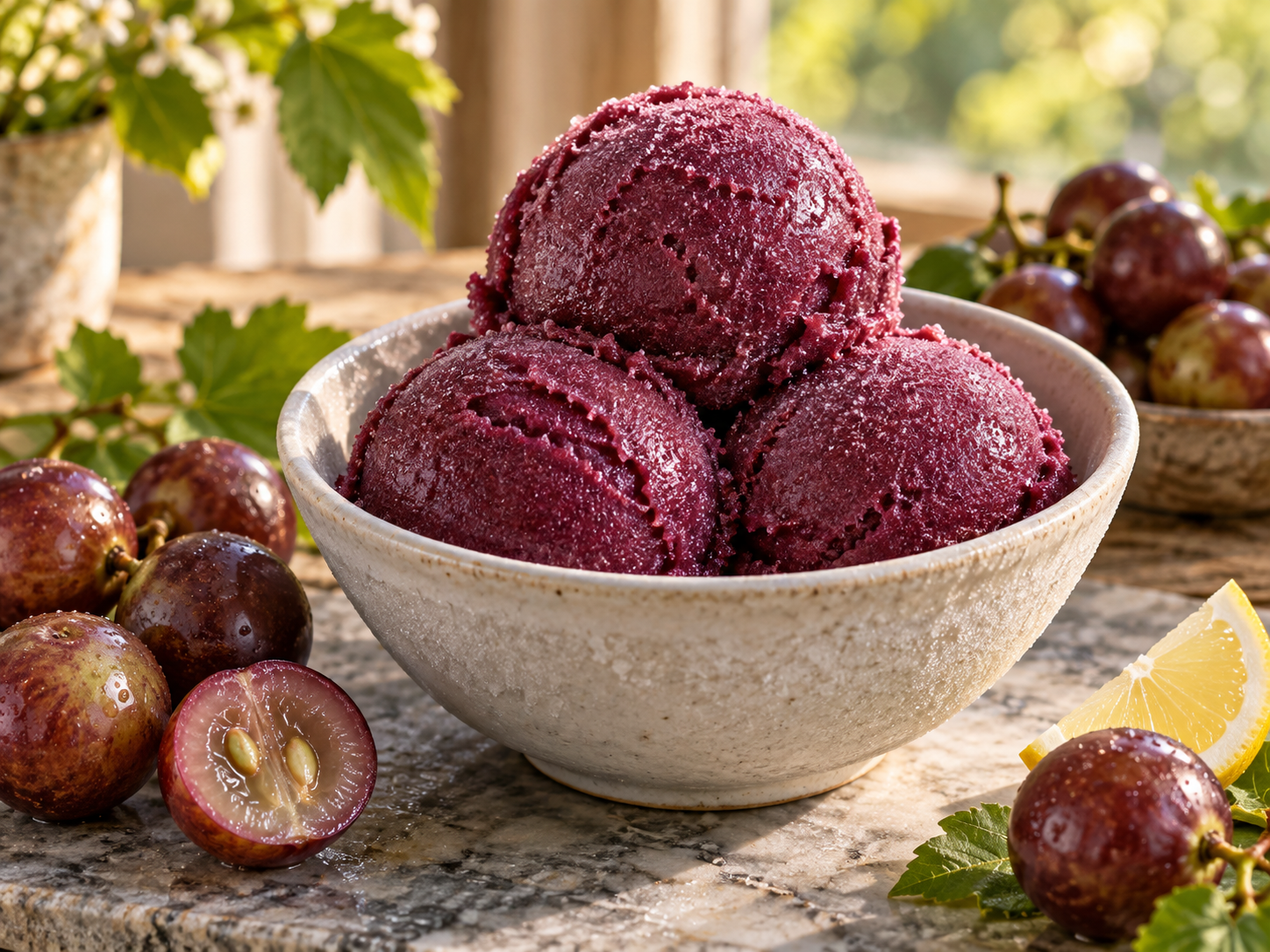
Fresh muscadines become a jewel-toned frozen dessert that keeps the fruit’s distinctive sweet-tart Southern flavor front and center.
Garden note: For a no-machine method, freeze the chilled mixture in a shallow metal pan and scrape it vigorously with a fork every 30 to 45 minutes until evenly frozen.
Continue your Georgia fruit garden
Continue with Georgia fruits, growing guides, harvest guidance, pest and disease help and the Recipe Finder.