Cauliflower can be one of the more challenging cool-season vegetables in a Georgia home garden, but that challenge makes timing and technique especially valuable. The crop performs best when it develops through cool weather without major interruptions from heat, drought or stress.
Season: cool season; spring and fall crops are possible.
Georgia planting framework: UGA's statewide chart lists approximately March 1–April 1 for spring and around August 15 for fall planting.
Sun: at least 6–8 hours per day.
Spacing: UGA's dedicated home-garden guide recommends about 18–24 inches between plants.
Harvest: cut the head while it is compact and firm.
Special skill: many white varieties need blanching to protect head color and quality.
Why Cauliflower Is Trickier Than Broccoli or Cabbage
Cauliflower belongs to the same Brassica family as broccoli, cabbage and kale, but UGA specifically describes it as one of the more difficult home-garden vegetables. The edible head develops best under relatively steady cool conditions. Stress while the plant is developing can mean smaller or poorer-quality heads.
That makes timing one of the most important Georgia skills. A spring crop has to mature before sustained heat; a fall crop has to establish while late-summer Georgia is still warm and then mature as temperatures cool.
Spring vs. Fall Cauliflower in Georgia
UGA's home-garden guidance recommends starting seed for a late-spring harvest at the beginning of February and moving hardened plants outside in March. For fall, seed can be started indoors near the end of July for transplanting around the last week of August.
The statewide Vegetable Planting Chart gives a narrower framework of about March 1–April 1 in spring and approximately August 15 for fall. Treat those dates as planning guides rather than guarantees: North Georgia, the mountains, central Georgia and the Coastal Plain do not warm and cool on the same schedule.
Best Cauliflower Varieties for Georgia
UGA's statewide chart lists Absolute, Early Snowball, Graffiti, White Magic and Symphony. Its dedicated cauliflower guide also discusses several useful types:
Snow Crown — about 50 days; white head and traditionally tied for best quality.
Imperial — about 60 days; a white variety that needs blanching.
Cheddar — about 68 days; yellow/orange head and should not be tied if maximum color is desired.
Amazing — about 75 days; dense white head.
Graffiti — about 80 days; intensely purple and does not need tying for white color.
Colored cauliflower is a useful reminder that cauliflower is not naturally limited to supermarket white. Variety choice can give a Georgia garden purple, yellow/orange or traditional white heads.
How to Grow Cauliflower in Georgia
Start with healthy plants: UGA notes that broccoli, cauliflower and cabbage generally do best when established from transplants.
Sun: choose a site with at least 6–8 hours of sunlight.
Soil: use rich, well-amended, well-drained soil. Organic matter is particularly useful in heavy clay or very sandy soils.
Spacing: allow approximately 18–24 inches between plants so mature leaves have room.
Water: maintain steady moisture; large swings between dry and wet conditions add stress.
Fertility: use a Georgia soil test to guide lime and fertilizer rather than applying amendments blindly.
What Does “Blanching” Cauliflower Mean?
In the garden, blanching cauliflower does not mean briefly boiling it. For many white cultivars, blanching means protecting the developing head from sunlight so it stays white and maintains good quality.
UGA recommends gathering leaves around the head and securing them when the head reaches roughly baseball size—about 4 inches across. Some modern self-blanching cultivars naturally curl leaves around the head. Colored varieties may be managed differently; for example, UGA advises against tying Cheddar if you want maximum color.
Georgia Companion Gardening with Cauliflower
Cauliflower shares pests and diseases with broccoli, cabbage, kale and other Brassicas. That makes rotation more meaningful than a long list of supposed miracle companions. Avoid planting the entire cabbage family in the same bed year after year simply because the individual crop changes.
Nearby flowering plants can support beneficial-insect diversity, but preserve sunlight and airflow. In Georgia's humidity, crowding a cauliflower planting to fit more “companions” can work against the crop.
How to Know When Cauliflower Is Ready to Harvest
Harvest when the head is compact and firm, before it loosens and quality declines. Cut the head at its base with a sharp knife. Cauliflower is best used soon after harvest, although UGA notes that heads can be refrigerated for a week or more and can also be frozen for longer storage.
Common Cauliflower Problems in Georgia
The same caterpillar complex that troubles other cole crops can attack cauliflower, including imported cabbageworm, cabbage looper and diamondback moth larvae. Aphids and flea beetles can also appear. Inspect leaf undersides and developing heads regularly.
Row covers can be particularly useful early in the crop before covers interfere with plant size. If treatment becomes necessary, identify the pest and use a product specifically labeled for cauliflower, following the label.
Cauliflower Recipes
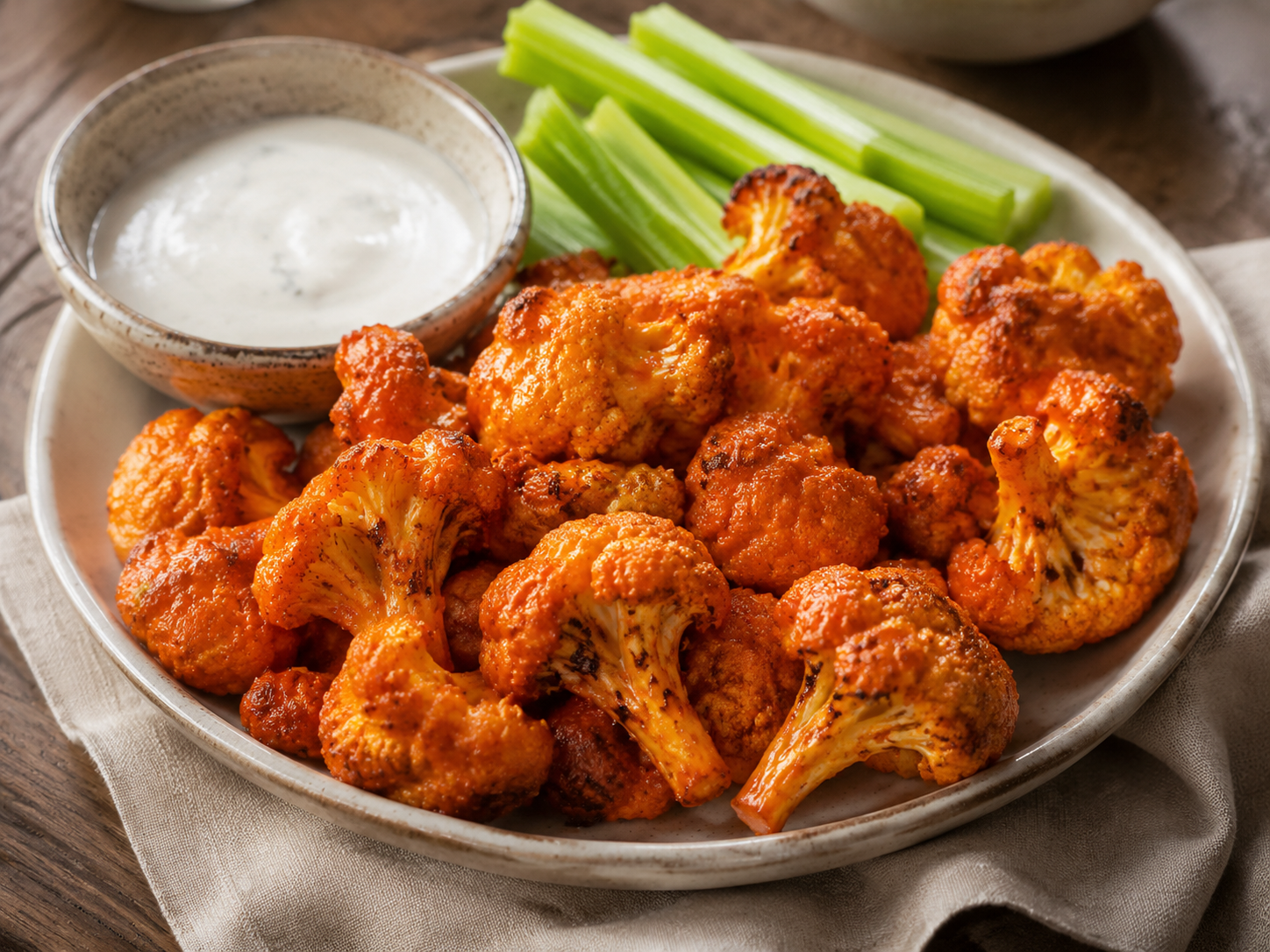
Cauliflower Buffalo Wings
Crispy baked cauliflower bites coated in seasoned batter and tossed with Buffalo sauce.
Yield: 4 servings
Prep: 20 min
Bake: 25 min
Total Time: 1 hr
Ingredients
1 head of cauliflower, cut into florets
1 cup all-purpose flour
1 cup water
1 teaspoon garlic powder
1/2 teaspoon onion powder
1/2 teaspoon paprika
1/4 teaspoon salt
1/4 teaspoon black pepper
1 cup buffalo sauce
2 tablespoons melted butter (optional)
Ranch or blue cheese dressing for dipping
Celery sticks for serving
Instructions
Preheat the oven to 450°F (230°C) and line a baking sheet with parchment paper.
In a large bowl, whisk together the flour, water, garlic powder, onion powder, paprika, salt, and pepper to create a batter.
Dip each cauliflower floret into the batter, allowing excess batter to drip off, and place them on the prepared baking sheet.
Bake in the preheated oven for 20-25 minutes or until the cauliflower is golden and crispy.
In a separate bowl, mix together the buffalo sauce and melted butter (if using).
Toss the baked cauliflower in the buffalo sauce mixture until well-coated.
Return the cauliflower to the oven for an additional 10-15 minutes until the sauce is sticky and caramelized.
Serve the cauliflower buffalo wings with ranch or blue cheese dressing and celery sticks.
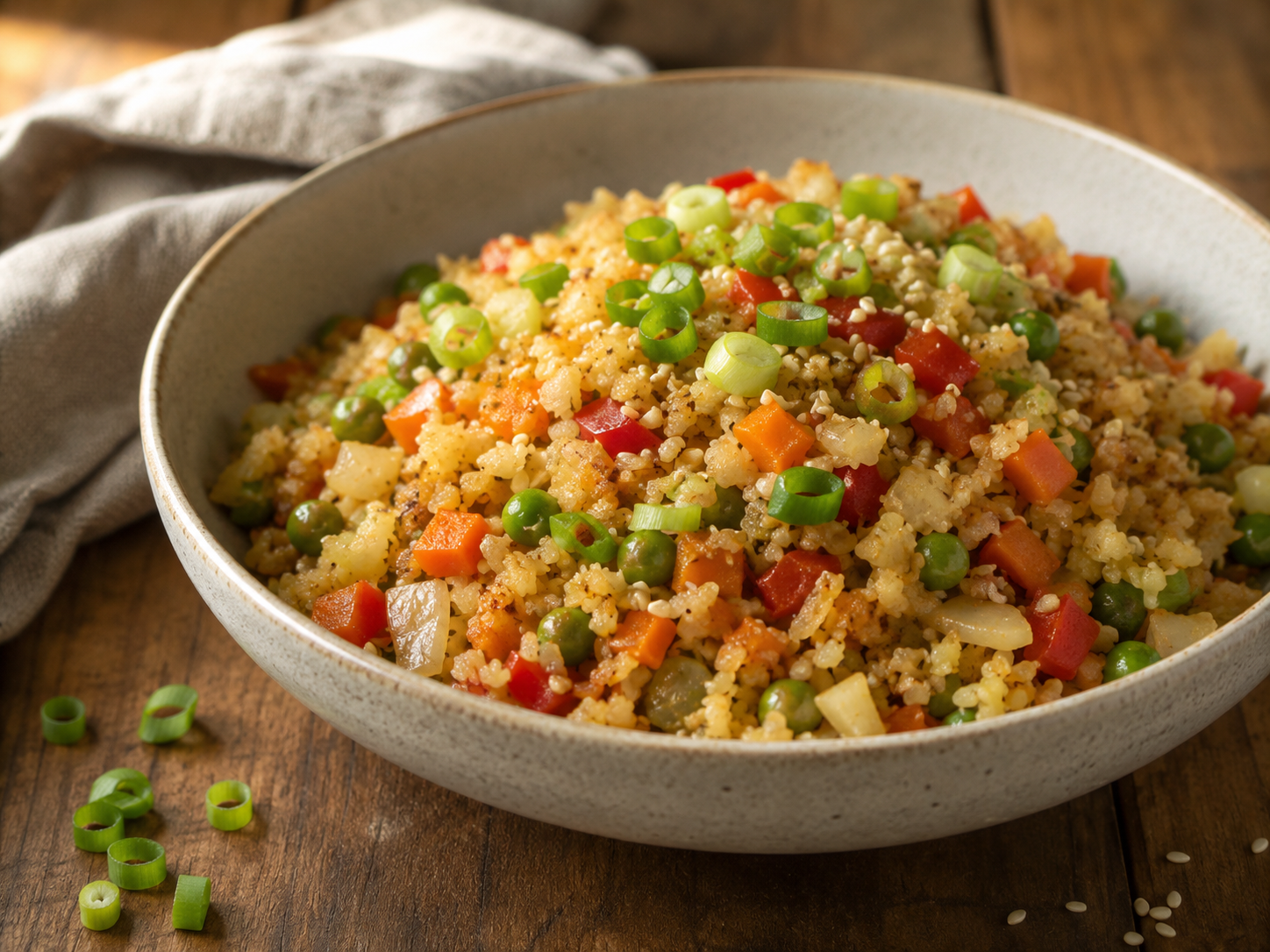
Cauliflower Rice Stir-Fry
Riced cauliflower stir-fried with onion, carrots, bell pepper and a savory vegetable medley.
Yield: 4 servings
Prep: 20 min
Cook: 17 min
Total Time: 37 min
Ingredients
1 head of cauliflower
2 tablespoons vegetable oil
1 onion, diced
2 carrots, diced
1 bell pepper, diced
2 cloves garlic, minced
1 cup frozen peas
3 tablespoons soy sauce
1 tablespoon sesame oil
2 green onions, chopped (for garnish)
Sesame seeds (optional)
Instructions
Cut the cauliflower into florets and pulse them in a food processor until they resemble rice grains.
Heat vegetable oil in a large skillet or wok over medium heat.
Add diced onion, carrots, bell pepper, and minced garlic. Stir-fry for 5-7 minutes until the vegetables are tender-crisp.
Add the cauliflower rice to the skillet and cook for an additional 5-7 minutes, stirring frequently.
Stir in the frozen peas and cook for another 2-3 minutes until heated through.
Drizzle soy sauce and sesame oil over the cauliflower rice and toss to combine.
Garnish with chopped green onions and sesame seeds, if desired.
Serve hot as a tasty and low-carb alternative to traditional rice.
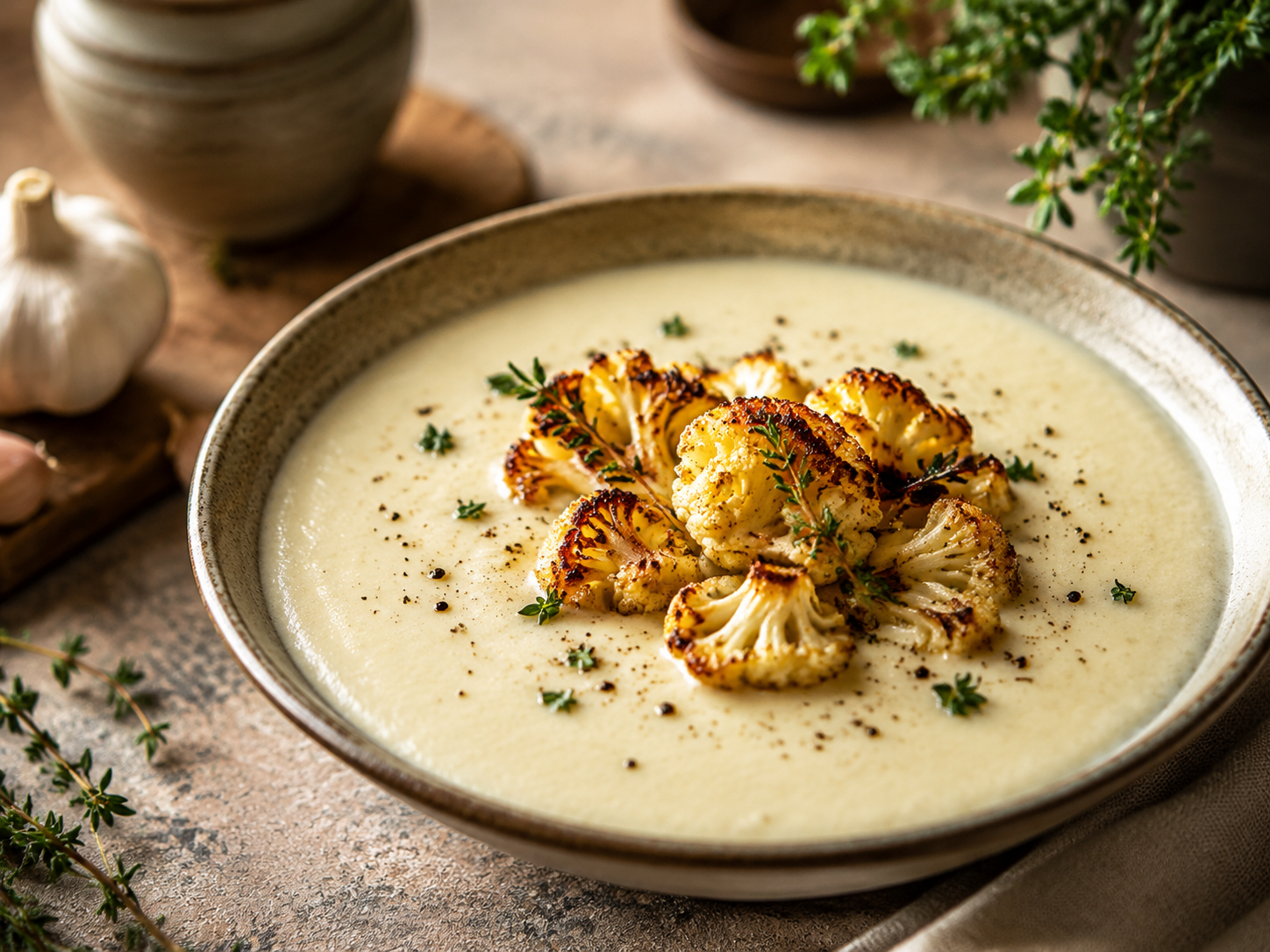
Creamy Roasted Cauliflower Soup
Roasted cauliflower blended with onion, garlic, thyme, broth and milk into a smooth, savory soup.
Yield: 6 servings
Prep: 15 min
Roast: 45 min
Total Time: 1 hr
Ingredients
1 large head cauliflower, cut into florets
2 tablespoons olive oil, divided
1 teaspoon kosher salt, divided
1/4 teaspoon black pepper, plus more for serving
1 medium yellow onion, chopped
3 garlic cloves, minced
4 cups low-sodium vegetable broth
1 teaspoon fresh thyme leaves, plus more for serving
1 cup whole milk
Instructions
Heat the oven to 425°F. Toss the cauliflower with 1 tablespoon olive oil, 1/2 teaspoon salt and the black pepper.
Roast for 25 to 30 minutes, turning once, until deeply browned and tender. Reserve a few small florets for serving.
Heat the remaining olive oil in a pot over medium heat. Add the onion and cook for 5 minutes. Add the garlic and cook for 30 seconds.
Add the roasted cauliflower, broth, thyme and remaining salt. Simmer for 10 minutes.
Blend until smooth with an immersion blender, or carefully blend in batches. Stir in the milk and warm gently without boiling.
Serve topped with the reserved cauliflower, thyme and black pepper.
Garden kitchen note: Refrigerate leftovers for up to 4 days. Reheat gently so the milk does not scorch.
Cauliflower and Chickpea Curry
Cauliflower and chickpeas simmered with tomato, coconut milk, ginger and warm curry spices.
Yield: 6 servings
Prep: 25 min
Simmer: 31 min
Total Time: 56 min
Ingredients
2 tablespoons vegetable oil
1 medium yellow onion, chopped
3 garlic cloves, minced
1 tablespoon grated fresh ginger
2 tablespoons curry powder
1 teaspoon ground cumin
1/2 teaspoon ground turmeric
2 tablespoons tomato paste
1 can (14.5 ounces) diced tomatoes
1 can (13.5 ounces) coconut milk
1 large head cauliflower, cut into bite-size florets
1 can (15 ounces) chickpeas, drained and rinsed
3 cups baby spinach
1/2 teaspoon kosher salt, plus more to taste
4 cups cooked rice for serving
1/4 cup chopped fresh cilantro
Instructions
Heat the oil in a Dutch oven over medium heat. Add the onion and cook for 5 minutes. Add the garlic and ginger and cook for 30 seconds.
Stir in the curry powder, cumin, turmeric and tomato paste. Cook for 1 minute.
Add the diced tomatoes, coconut milk, cauliflower, chickpeas and salt. Bring to a simmer.
Cover and cook for 15 minutes, then uncover and simmer for 5 to 8 minutes more, until the cauliflower is tender and the sauce has thickened.
Fold in the spinach and cook for 2 minutes, until wilted. Taste for salt.
Serve over rice and finish with fresh cilantro.
Garden kitchen note: Cut the cauliflower into similar-size florets so they cook evenly without becoming mushy.
Georgia Cauliflower Growing Calendar
Use the planting windows above as the primary statewide guide. Cool-season success depends on getting the crop established early enough to mature before unfavorable temperatures. Keep notes on your own garden's frost dates and performance so next year's timing becomes even more local.