Growing Butternut Squash in Georgia

Butternut squash is a warm-season winter squash that uses Georgia's long summer to produce fruit for fall cooking and storage. The biggest requirements are time, sun, pollination and enough room for vigorous vines.

Georgia Butternut Squash Quick Facts

When to Plant Butternut Squash in Georgia

UGA lists winter squash from approximately April 1 through July 1. Regional frost dates matter: South Georgia can generally begin warm-season planting earlier, while North Georgia runs later. For late plantings, count backward from expected fall frost because winter squash needs a long season to mature.

How Much Space Does Butternut Squash Need?

More than zucchini. Butternut is a vining winter squash, and UGA commercial guidance notes vining squash can require 5–8 feet between rows. Give vines room to run, train them along the edge of a garden, or use sturdy vertical support only if you can support developing fruit safely.

Georgia Companion Planting with Butternut Squash

Butternut's sprawling vines make companion planting primarily a space-and-pollinator strategy. Nearby flowering herbs and annual flowers can add nectar and pollen resources for beneficial insects and pollinators. Corn and beans can also appear with squash in traditional Three Sisters-style plantings, although modern garden spacing should be planned carefully so the squash does not overwhelm smaller plants.

Avoid crowding butternut beside other sprawling cucurbits if airflow and access will suffer. Rotate squash-family crops—pumpkins, cucumbers, melons and other squash—rather than growing them repeatedly in the same spot.

Pumpkin-Like Flowers: Why Bees Matter

Squash plants produce separate male and female flowers. Pollen is sticky and depends heavily on bee visits. A tiny squash behind a female flower that yellows and drops instead of enlarging may indicate poor pollination. Protect bees by avoiding unnecessary insecticide applications during bloom.

How to Grow Butternut Squash

When Is Butternut Squash Ready?

Look for mature tan color, a hard rind that resists a fingernail and a drying corky stem. Cut fruit with a section of stem attached rather than tearing it from the vine. Mature winter squash stores far better than immature fruit.

Georgia Squash Pests and Disease Pressure

Squash bugs, vine borers, cucumber beetles and foliar diseases can become significant in Georgia's long, humid season. Scout early, rotate cucurbit crops, maintain airflow and remove badly diseased plant debris. Disease and insect pressure often rises as the season progresses.

Georgia Vegetables Growing Guides Seasonal Produce Pest & Disease Help

Butternut Squash Recipes
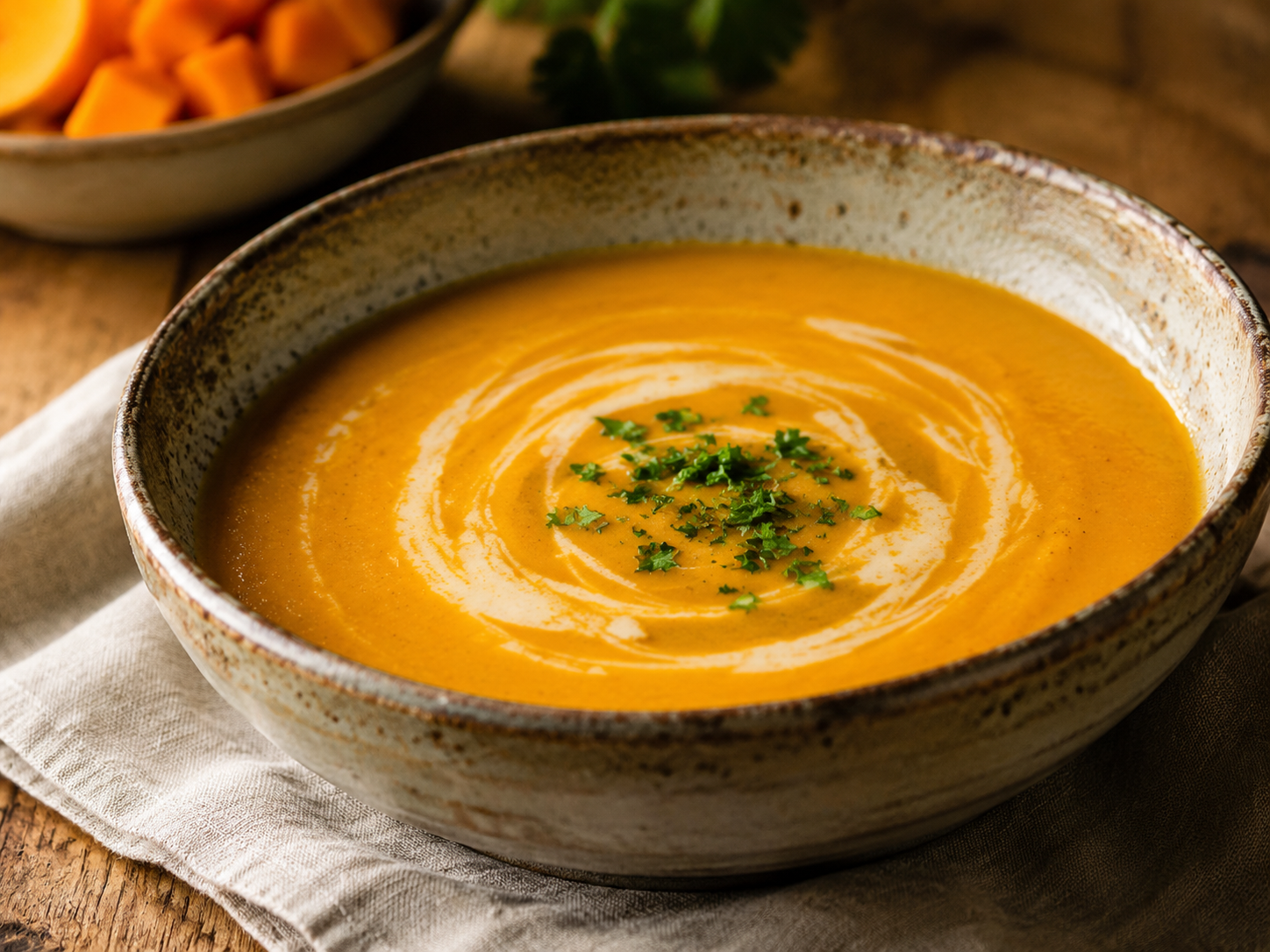
Roasted Butternut Squash Soup prepared with garden-fresh butternut squash

Roasted Butternut Squash Soup

Roasted butternut squash blended with carrots, onion, garlic and vegetable broth.

  • Yield: 6 servings
  • Prep: 20 min
  • Roast: 1 hr
  • Total Time: 1 hr 20 min

Ingredients

  • 1 medium-sized butternut squash, peeled, seeded, and diced
  • 1 onion, chopped
  • 2 carrots, peeled and chopped
  • 2 cloves garlic, minced
  • 4 cups vegetable broth
  • 2 tablespoons olive oil
  • 1 teaspoon ground cumin
  • 1/2 teaspoon ground cinnamon
  • Salt and pepper to taste
  • 1/2 cup coconut milk (optional)
  • Fresh parsley for garnish

Instructions

  1. Preheat the oven to 400°F (200°C).
  2. Toss the diced butternut squash, chopped onion, and carrots with olive oil, cumin, cinnamon, salt, and pepper.
  3. Spread the vegetables on a baking sheet and roast in the preheated oven for about 30-40 minutes or until tender and lightly browned.
  4. In a large pot, sauté minced garlic until fragrant. Add the roasted vegetables and vegetable broth.
  5. Bring the mixture to a boil, then reduce the heat and simmer for about 15-20 minutes.
  6. Use an immersion blender to puree the soup until smooth.
  7. Stir in coconut milk if desired, and adjust seasoning to taste.
  8. Serve hot, garnished with fresh parsley.
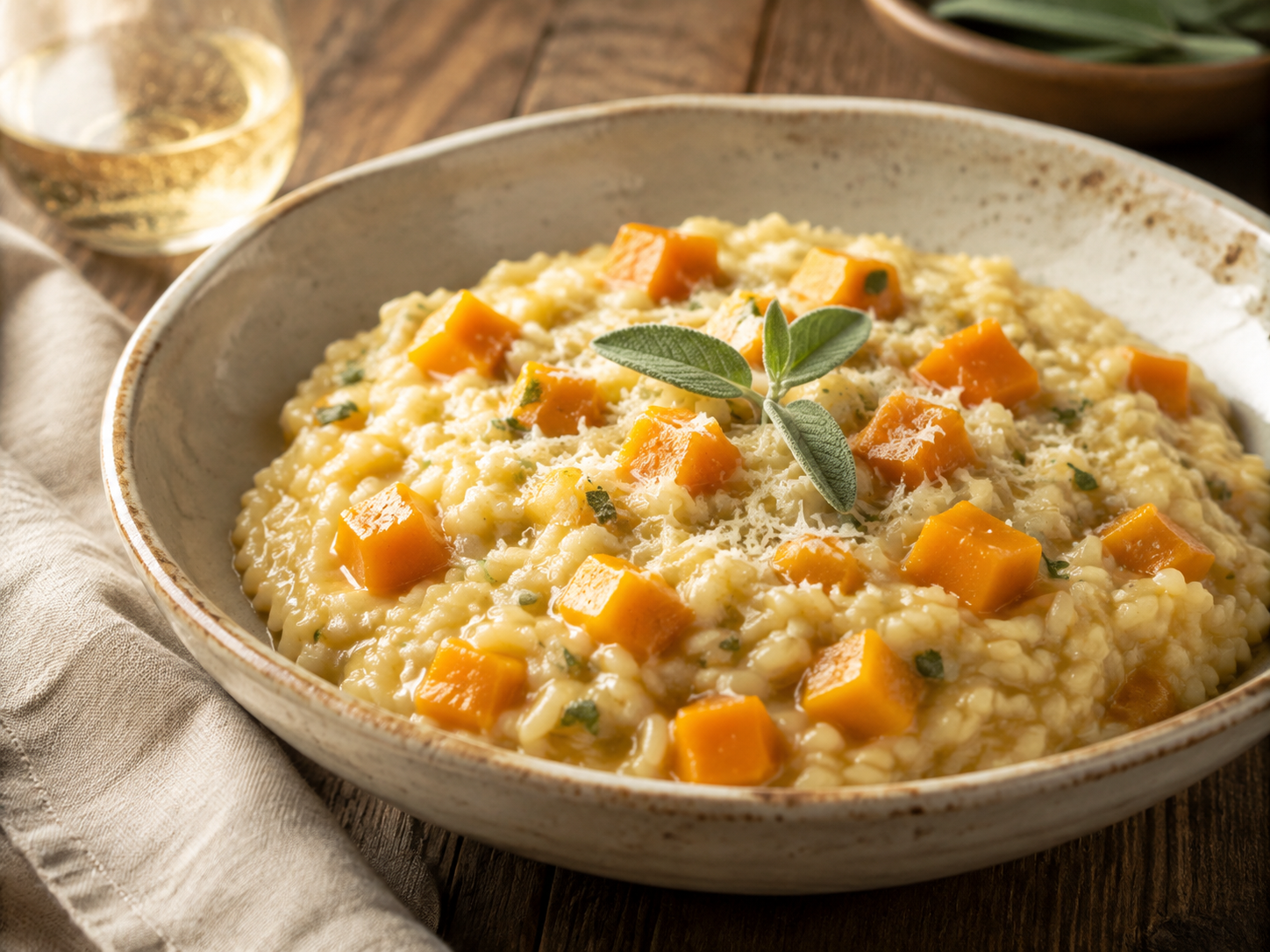
Butternut Squash and Sage Risotto prepared with garden-fresh butternut squash

Butternut Squash and Sage Risotto

Creamy Arborio rice cooked with butternut squash, sage, Parmesan and a splash of white wine.

  • Yield: 4 servings
  • Prep: 20 min
  • Sauté: 15 min
  • Total Time: 35 min

Ingredients

  • 1 cup Arborio rice
  • 3 cups butternut squash, peeled and diced
  • 1 small onion, finely chopped
  • 2 cloves garlic, minced
  • 1/2 cup dry white wine
  • 4 cups vegetable broth, kept warm
  • 2 tablespoons olive oil
  • 2 tablespoons fresh sage, chopped
  • 1/2 cup Parmesan cheese, grated
  • Salt and pepper to taste

Instructions

  1. In a large skillet or saucepan, heat olive oil over medium heat. Add chopped onions and garlic, sauté until softened.
  2. Add Arborio rice to the pan and stir until the rice is well-coated with the oil.
  3. Pour in the white wine and cook until the liquid is mostly absorbed.
  4. Begin adding the warm vegetable broth, one ladle at a time, stirring frequently. Allow the liquid to be absorbed before adding the next ladle of broth.
  5. In a separate pan, sauté diced butternut squash in olive oil until it's tender but still holds its shape.
  6. When the risotto is almost cooked (al dente), stir in the sautéed butternut squash and fresh sage.
  7. Once the rice is creamy and cooked to your liking, stir in Parmesan cheese and season with salt and pepper.
  8. Serve warm, garnished with additional sage leaves if desired.
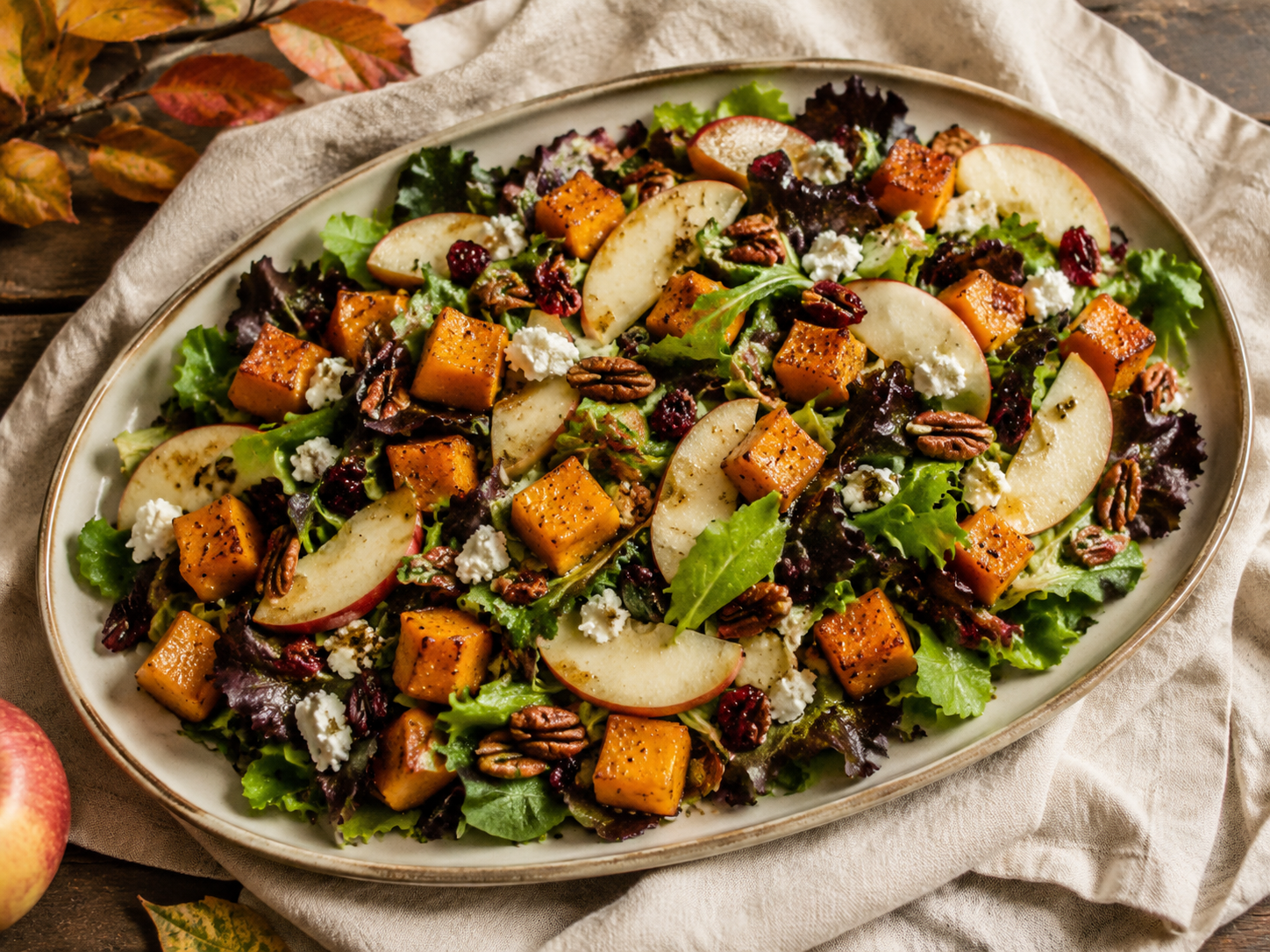
Butternut squash and apple harvest salad with greens, pecans, cranberries and goat cheese

Butternut Squash and Apple Harvest Salad

Roasted butternut squash, crisp apple, greens, pecans, cranberries and goat cheese with maple-Dijon dressing.

  • Yield: 6 servings
  • Prep: 20 min
  • Roast: 30 min
  • Total Time: 50 min

Ingredients

  • 4 cups peeled 3/4-inch butternut squash cubes
  • 2 tablespoons olive oil, divided
  • 1/2 teaspoon kosher salt, divided
  • 1/4 teaspoon black pepper
  • 6 cups mixed salad greens
  • 1 crisp apple, cored and thinly sliced
  • 1/2 cup toasted pecans
  • 1/3 cup dried cranberries
  • 1/3 cup crumbled goat cheese
  • 2 tablespoons apple cider vinegar
  • 1 tablespoon pure maple syrup
  • 1 teaspoon Dijon mustard

Instructions

  1. Heat the oven to 425°F. Toss the squash with 1 tablespoon olive oil, 1/4 teaspoon salt and the black pepper.
  2. Roast on a rimmed baking sheet for 25 to 30 minutes, turning once, until browned and tender. Let cool for 10 minutes.
  3. Whisk the remaining olive oil, apple cider vinegar, maple syrup, Dijon mustard and remaining salt.
  4. Arrange the greens on a platter. Add the roasted squash, apple slices, pecans, cranberries and goat cheese.
  5. Drizzle with the dressing and toss gently just before serving.

Garden kitchen note: Roast the squash up to one day ahead and refrigerate it separately. Slice the apple shortly before serving.

Butternut squash breakfast hash with red bell pepper, onion, four baked eggs and fresh chives

Butternut Squash Breakfast Hash

A savory skillet hash of browned butternut squash, bell pepper and onion topped with baked eggs and chives.

  • Yield: 4 servings
  • Prep: 15 min
  • Bake: 27 min
  • Total Time: 42 min

Ingredients

  • 4 cups peeled 1/2-inch butternut squash cubes
  • 1 red bell pepper, diced
  • 1 small yellow onion, diced
  • 2 tablespoons olive oil
  • 1 teaspoon smoked paprika
  • 1/2 teaspoon kosher salt
  • 1/4 teaspoon black pepper
  • 4 large eggs
  • 2 tablespoons chopped fresh chives

Instructions

  1. Heat the oven to 400°F.
  2. Heat the olive oil in a large oven-safe skillet over medium heat. Add the squash, cover and cook for 8 minutes, stirring twice.
  3. Add the bell pepper, onion, smoked paprika, salt and black pepper. Cook uncovered for 8 to 10 minutes, until the vegetables are tender and browned.
  4. Make four wells in the hash and crack one egg into each well.
  5. Transfer the skillet to the oven and bake for 6 to 9 minutes, until the egg whites are set to your preference.
  6. Sprinkle with chives and serve directly from the skillet.

Garden kitchen note: Cut the squash into small, even cubes so it becomes tender without overcooking the peppers.


Keep Exploring Georgia's Garden

Continue with our Georgia growing guides, seasonal produce guide, pest and disease help and garden-to-kitchen recipes.

Georgia timing note: statewide dates are planning guides. UGA notes that extreme South Georgia can run roughly two to three weeks earlier in spring than middle Georgia, while North Georgia can run one to three weeks later; fall timing shifts in the opposite direction. Always adjust for local weather and frost dates.


Keep Exploring GA Garden

Georgia Planting Calendar · Companion Planting · Georgia Vegetable Guides · Harvesting Guides · Three Sisters & Companion Growing · Squash Growing Guide · Georgia Growing Guides