North Georgia
Use the cool-season onion strategy, but allow for spring development to run roughly 1–3 weeks later than the Middle Georgia baseline and begin fall establishment about two weeks earlier.
Georgia allium growing guide
Successful Georgia onions begin with the right day-length type. Short-day cultivars establish through the cool season, then begin forming bulbs as days lengthen—making variety choice, timing and steady early growth central to the crop.
Build bulbs through the cool season
Short-day onions.
Establish in fall or winter for spring harvest.
Full sun with loose, fertile, well-drained soil.
Bulbs mature as tops soften and fall.
Day length controls bulbing
Short-day cultivars begin forming bulbs under the shorter day lengths found in the South.
Long-day onions are better suited farther north. Buying an onion simply because it looks appealing in a catalog can therefore lead to disappointing Georgia bulbs.
PLANT BY REGION
Georgia gardeners commonly establish short-day onions during the cool season so bulbs can mature in spring. The regional windows below apply the site's UGA-based calendar framework without treating onions as a summer transplant crop.
Use the cool-season onion strategy, but allow for spring development to run roughly 1–3 weeks later than the Middle Georgia baseline and begin fall establishment about two weeks earlier.
Use the statewide baseline: establish short-day onions in fall, carry them through winter and into early spring, then harvest as bulbs mature.
Fall establishment can extend later than in Middle Georgia, while the spring portion of the cool-season calendar can run roughly 2–3 weeks earlier.
Day-length type remains the controlling variety decision. Regional calendar shifts do not make long-day onions appropriate for Georgia.
A protected commercial identity
Vidalia is not a generic name for every sweet onion grown in Georgia. The commercial name is tied to a legally defined production area and requirements. Home gardeners elsewhere in Georgia can grow excellent sweet short-day onions, but that does not make the harvest a Vidalia onion.
Support roots before bulbs mature
Choose a full-sun site.
Use loose, fertile, well-drained soil and avoid waterlogged beds.
Keep soil reasonably moist while roots and leaves develop.
Shallow roots compete poorly with weeds, while excess nitrogen late in the crop can delay bulb maturation.
Use upright growth along bed edges
Onions fit well along bed edges and beside lettuce, carrots, beets and many leafy crops because their upright growth occupies relatively little horizontal space. Keep enough room for bulb expansion.
Companion planting can improve bed diversity, but it should not be presented as guaranteed pest control.
Cure bulbs after the tops fall
As bulbs mature, tops soften and fall. Harvest during dry weather when possible, handle bulbs gently and cure them in a dry, well-ventilated location out of rain.
Sweet onions generally do not store as long as pungent storage types, so match storage expectations to the cultivar.
Grow → Harvest → Cook: Put cured and fresh onions to work in the protected recipes below, then browse the complete Georgia Garden Recipe Finder.
From Georgia onion beds to the kitchen
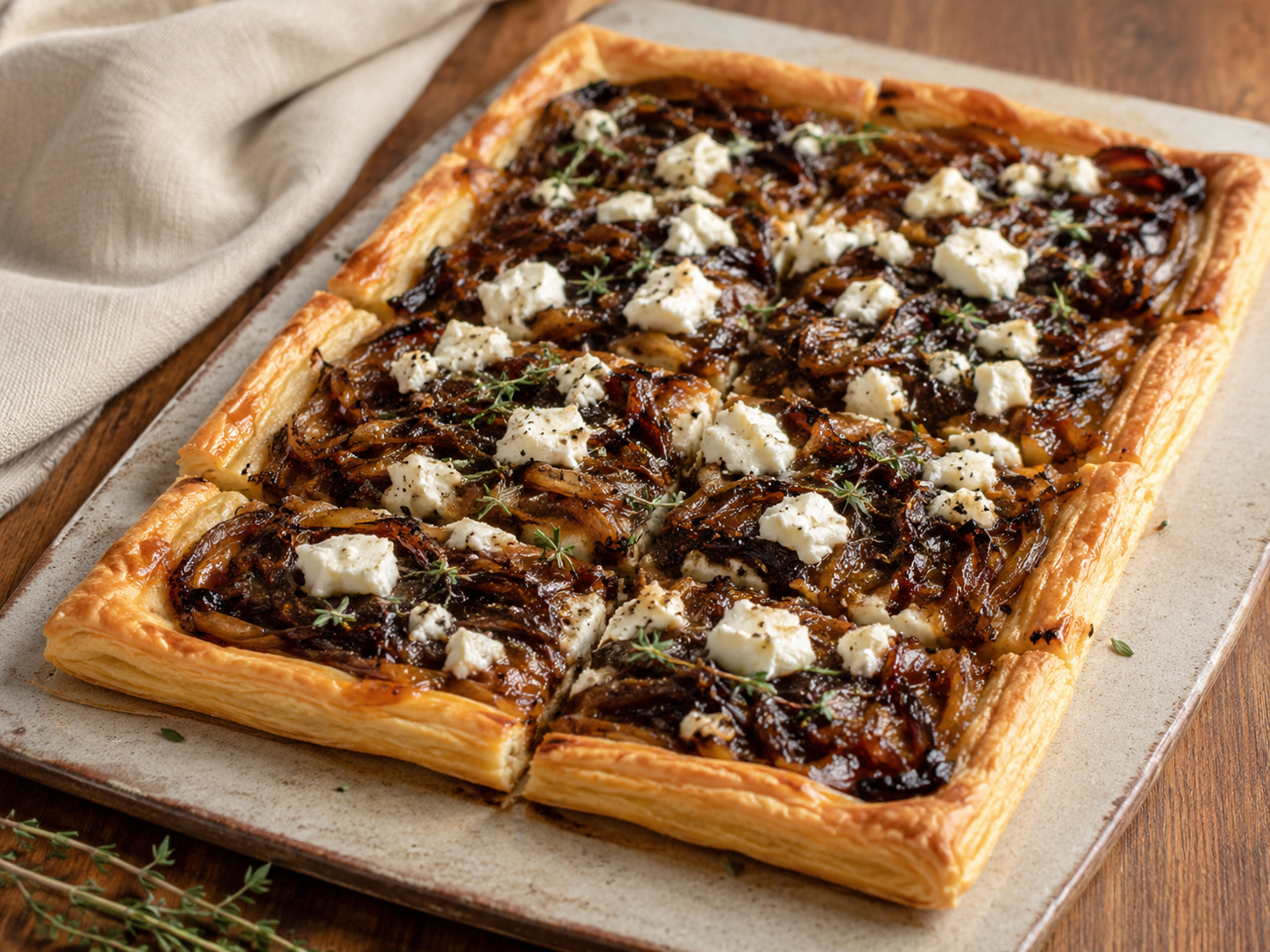
Flaky puff pastry topped with slow-caramelized onions, tangy goat cheese and balsamic vinegar.
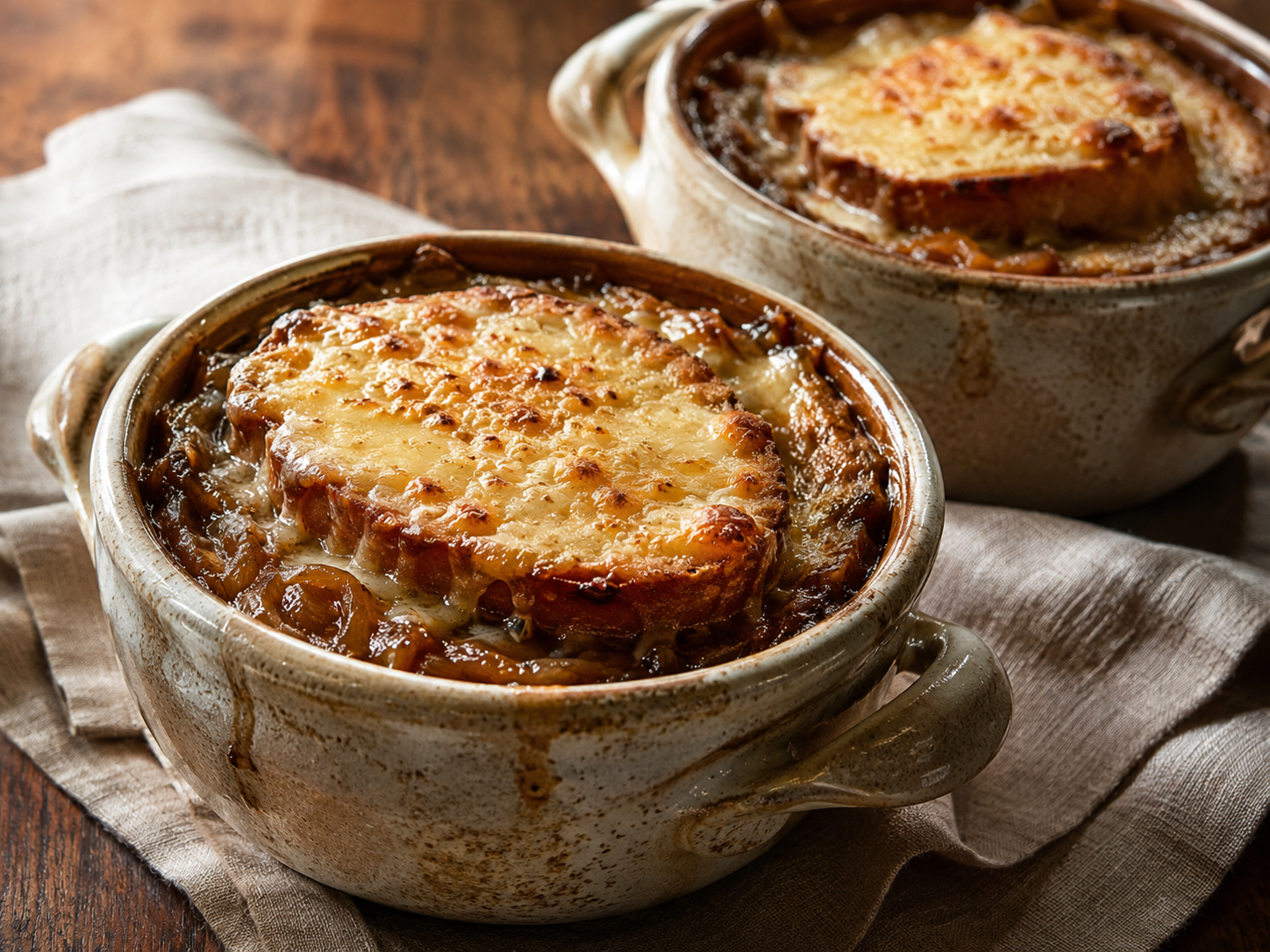
Slow-cooked onions served in beef broth for a deeply savory, comforting soup.
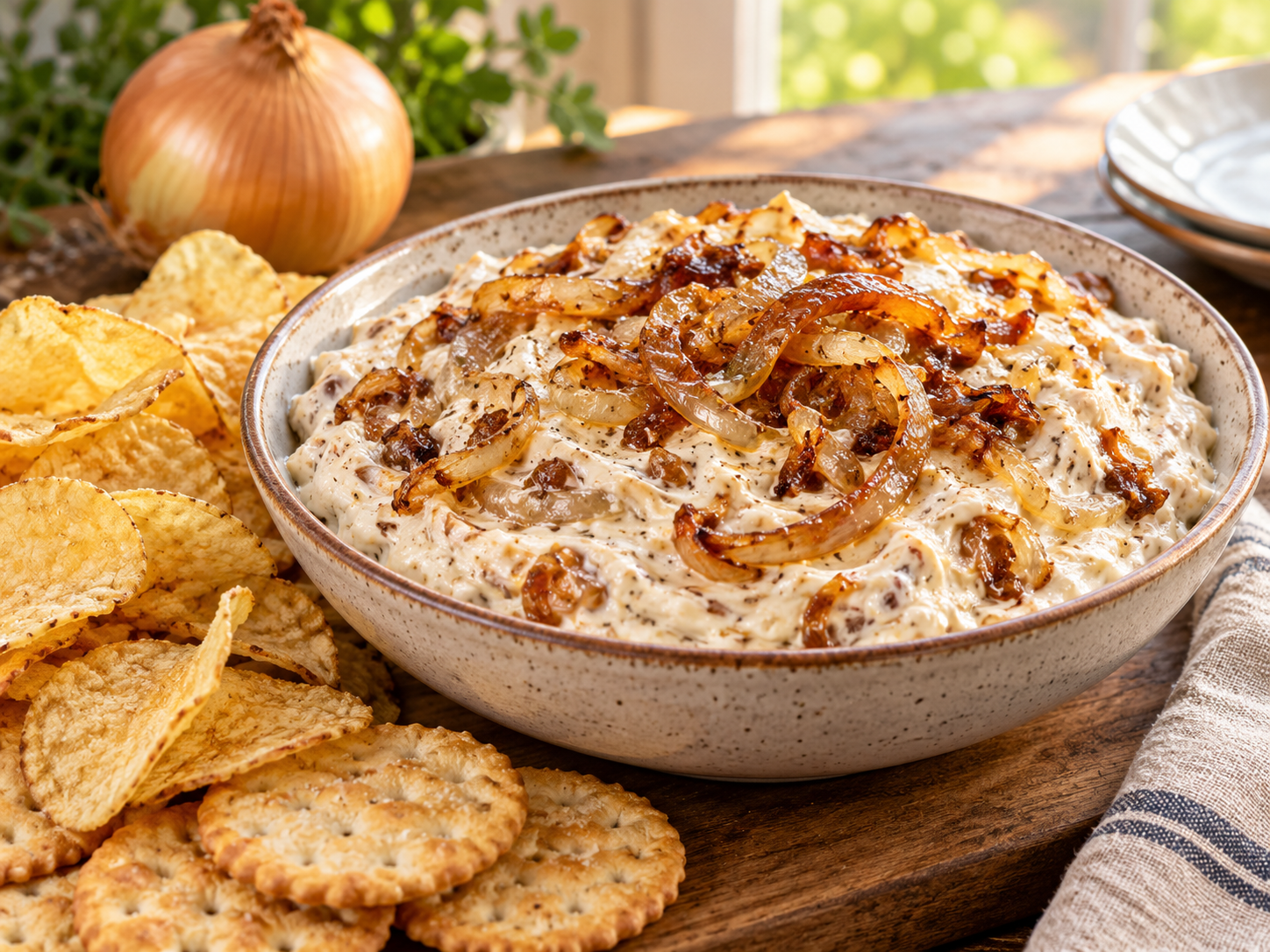
Slowly caramelized garden onions are folded into a cool, creamy dip with a savory splash of Worcestershire and balsamic vinegar.
Garden note: Patient, low heat develops sweetness without burning. The dip can be made a day ahead; let it stand for 10 minutes before serving if very firm.
Continue planning your Georgia garden
Continue with Georgia vegetables, our Georgia growing guides, seasonal produce guide and garden-to-kitchen recipes.
Georgia Planting Calendar · Companion Planting · Harvesting Guides · Pest & Disease Help