North Georgia
Use approximately Jan. 29–Apr. 3 for spring and Aug. 6–Sept. 1 for fall, reflecting UGA's two-week North Georgia shift.
Georgia cool-season root crop guide
Straight, flavorful carrots begin with direct sowing into deep, loose soil, patient germination, early thinning and cool-season timing that lets roots size before heat builds.
Direct seed, thin early and protect the root zone
Grow carrots in Georgia's spring and fall cool seasons.
Direct-sow seed; carrots do not respond well to root disturbance.
Thin established seedlings to roughly 2–3 inches apart.
Deep, loose, stone-free soil supports straighter roots.
PLANT BY REGION
UGA's current chart gives Middle Georgia spring and fall windows and regional shift guidance. Carrots should be direct-sown into prepared soil, not transplanted to force an earlier start.
Use approximately Jan. 29–Apr. 3 for spring and Aug. 6–Sept. 1 for fall, reflecting UGA's two-week North Georgia shift.
Use Jan. 15–Mar. 20 for spring and Aug. 20–Sept. 15 for fall.
Use approximately Jan. 1–Mar. 6 for spring. UGA supports fall planting somewhat later than Middle Georgia but does not publish a precise South Georgia fall offset.
Ranges follow the UGA Home Gardening planting chart. The South Georgia fall qualification remains deliberately nonnumeric.
Match root shape to the bed
Shorter, broad-shouldered roots can be more forgiving where beds are not deep enough for long carrots. Chantenay appears on UGA's list.
Scarlet Nantes is a UGA-listed cylindrical carrot valued for a useful balance of shape and eating quality.
Sweetbites, Sweet Delight and Thumbelina provide additional UGA-listed options, including compact forms for shallower prepared beds.
Georgia clay must be prepared for root growth
Loosen soil deeply and remove rocks, clods and compacted layers.
Use a sunny bed during the cool growing season.
Keep the shallow seed zone evenly moist until seedlings emerge.
A smooth, crumbly surface improves contact around small carrot seed.
Carrot seed can be slow and uneven when the soil surface dries.
Direct-sow about ½ inch deep according to UGA's current chart, firm gently, and use a light mulch only where it can protect moisture without burying emerging seedlings.
Sow shallowly, then create room for each root
Break up the bed, remove stones and create a fine surface without compacting it.
Sow seed in shallow rows, firm gently and keep the surface evenly moist through germination.
Once seedlings are established, thin to about 2–3 inches so neighboring roots do not compete or twist together.
Protect light, moisture and harvest access
Pair carrots with crops that do not shade the low foliage or disturb the root zone. Companion placement should prioritize spacing, irrigation and harvest access rather than unsupported pest-repellency claims.
Most defects begin in the root zone
Rocks, clods, compaction, root injury and excessive fresh organic matter can divert the growing root.
Exposed root crowns can turn green. Keep shoulders lightly covered as roots enlarge without piling soil over the foliage.
Surface drying, crusted soil, damping-off, root-feeding pests or nematodes can reduce stands or damage roots. Diagnose before treating.
Judge by shoulder size and cultivar maturity
Pull a sample when roots reach the expected shoulder diameter and days to maturity for the cultivar. Loosen heavy soil before lifting so roots do not snap, then trim tops before storage to limit moisture loss.
Grow → Harvest → Cook: Carry crisp Georgia carrots into the protected recipes below, then browse the complete Georgia Garden Recipe Finder.
From prepared soil to the kitchen
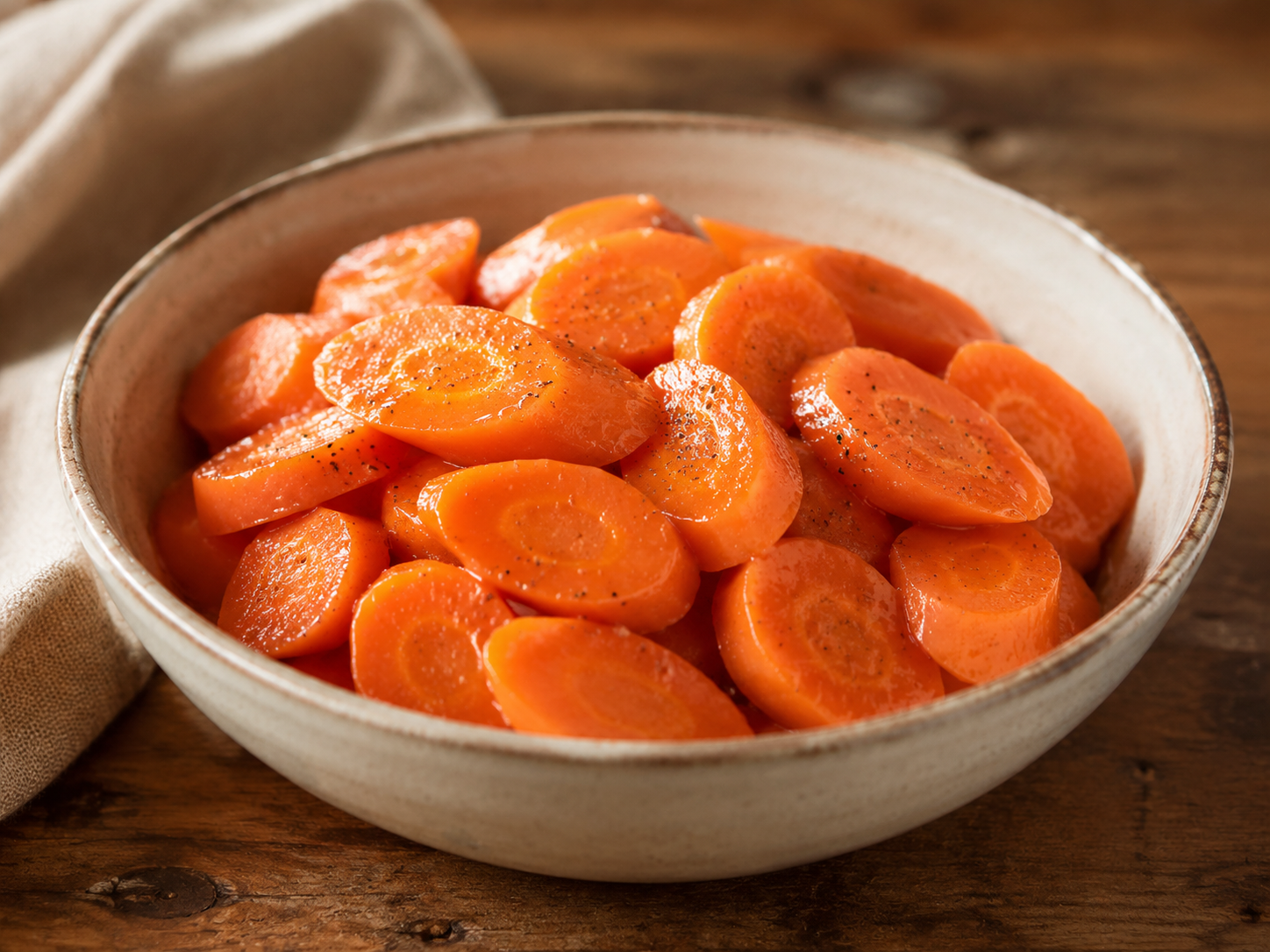
Sliced carrots glazed with butter and honey for a simple sweet-savory side.
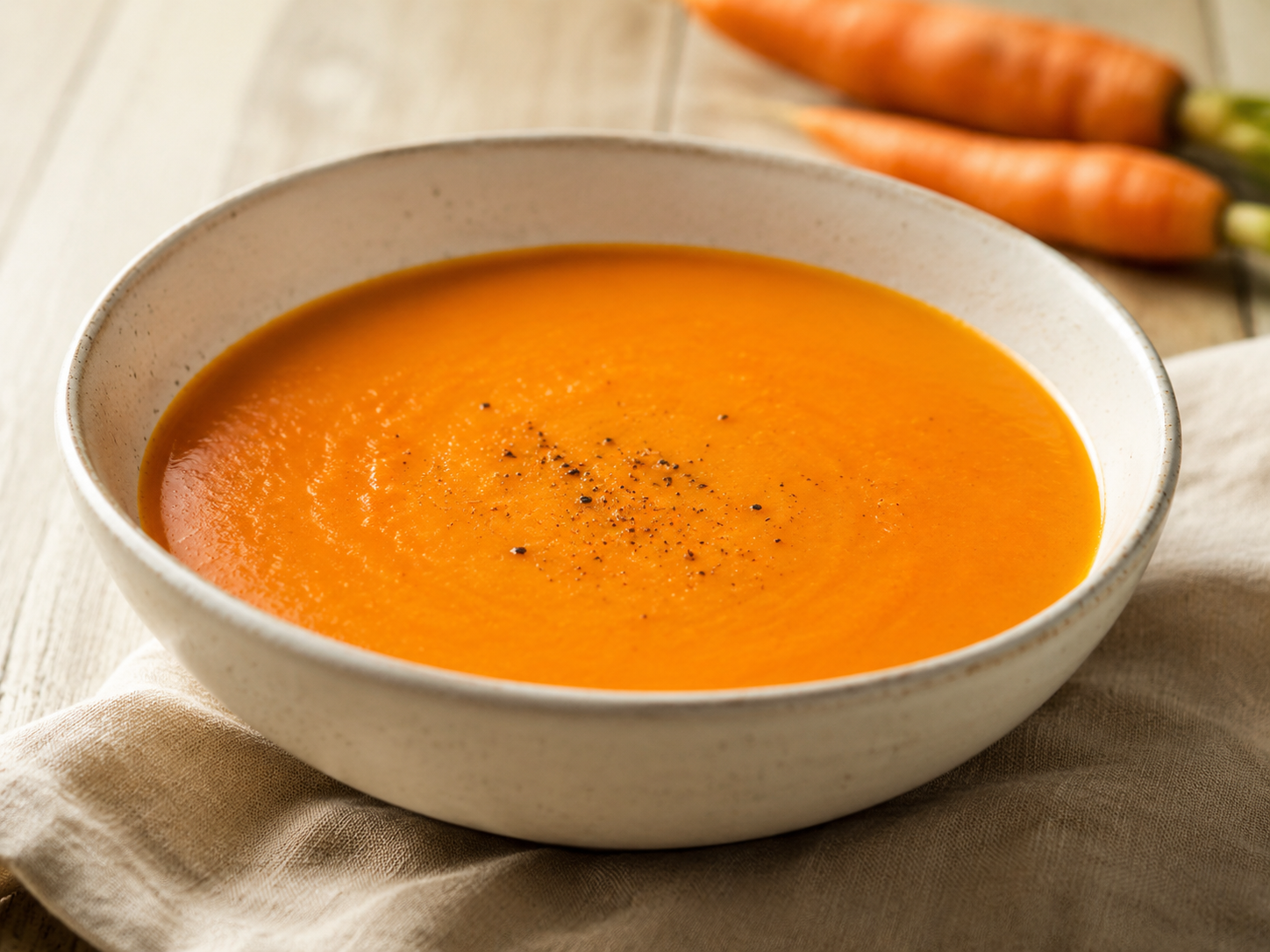
A smooth carrot soup warmed with fresh ginger, garlic and vegetable broth.
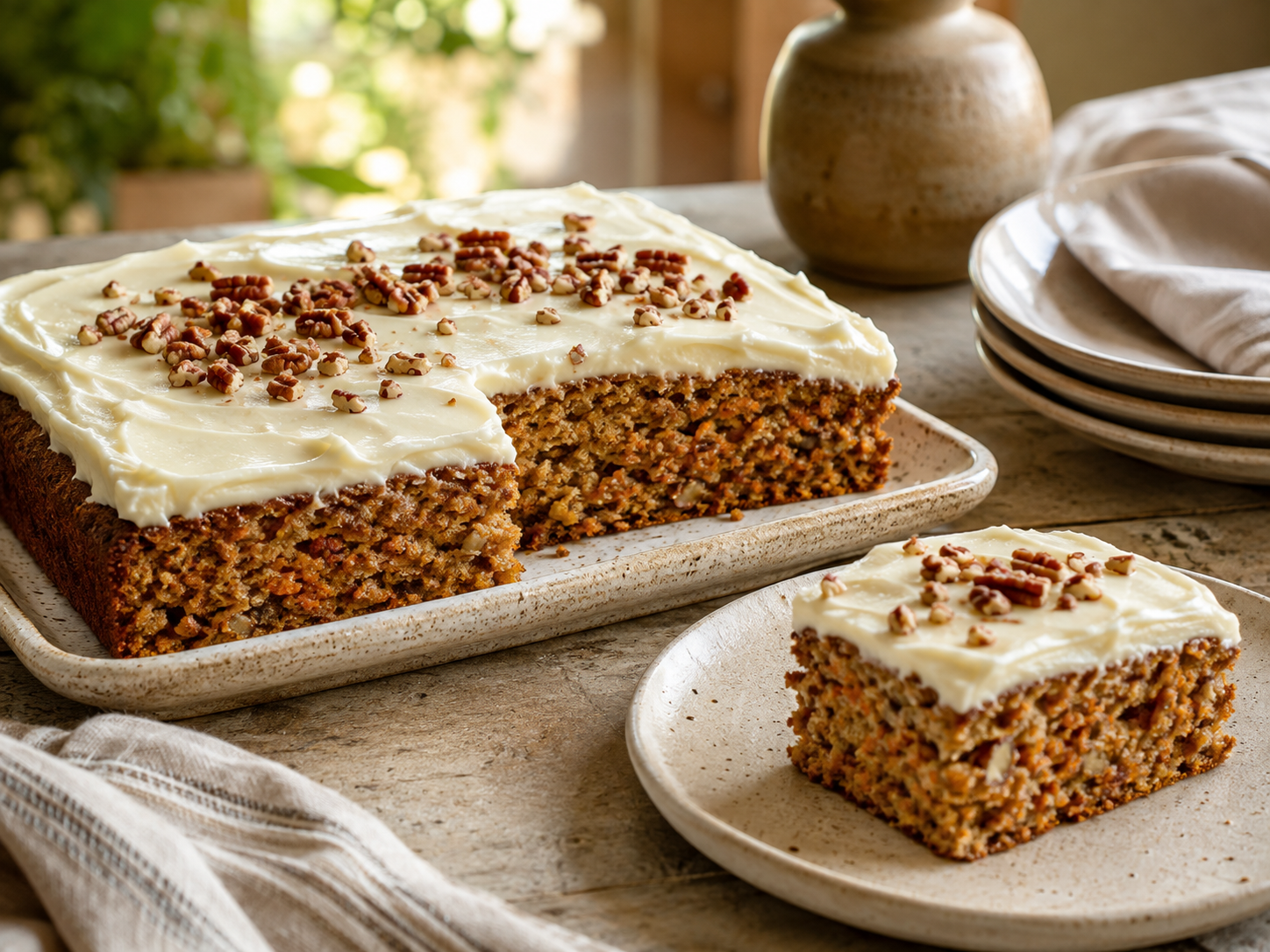
A moist pecan-studded carrot cake topped with tangy cream cheese frosting.
Garden kitchen note: Keep the frosted cake refrigerated. For the best texture, let individual servings stand at room temperature for 15 minutes.
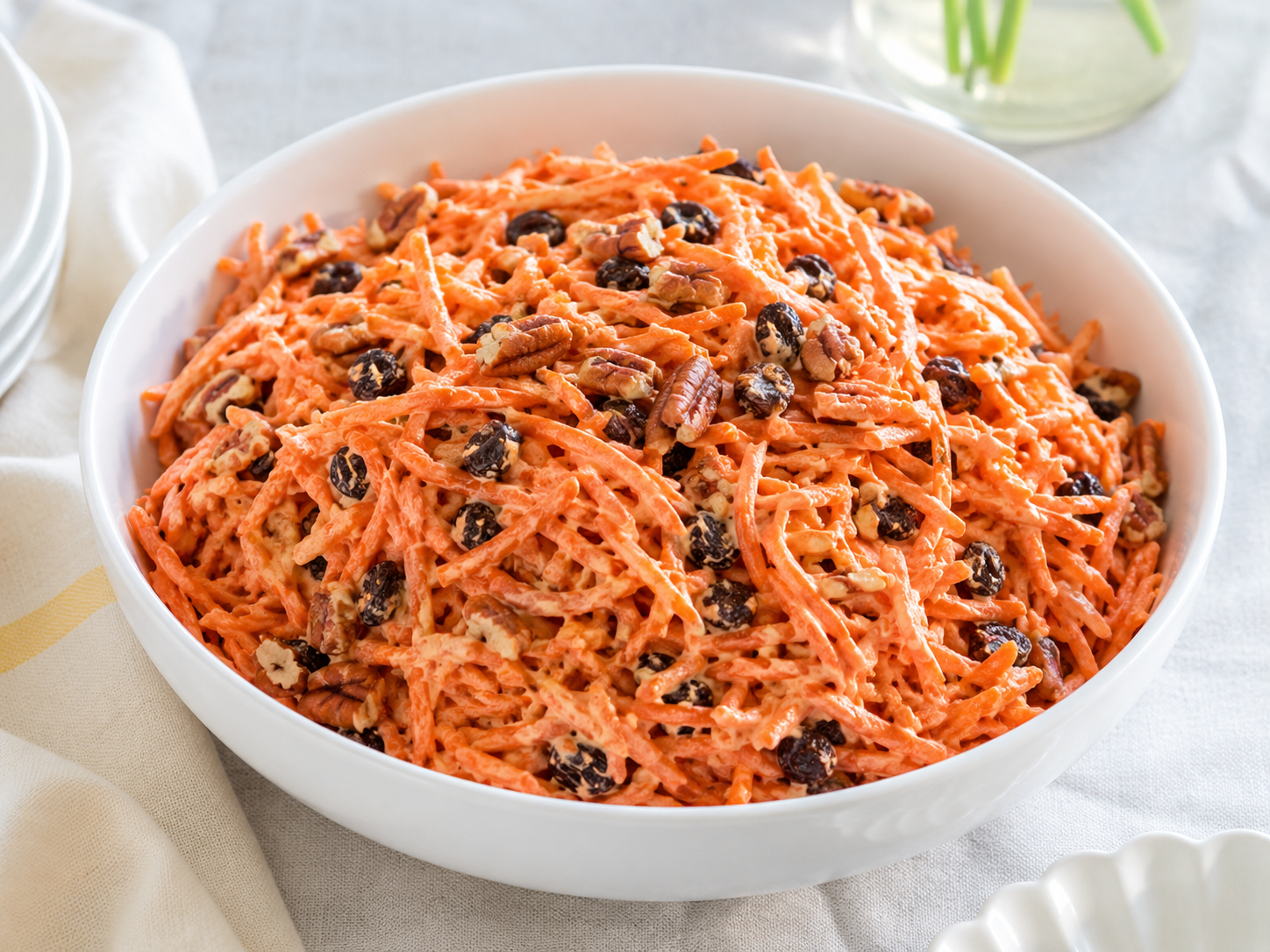
A crisp, lightly creamy carrot salad with raisins, toasted pecans, lemon and honey.
Garden kitchen note: For the crispest texture, prepare no more than one day ahead and keep refrigerated.
Continue your Georgia cool-season garden
Continue with radishes, Georgia vegetables, the Georgia Planting Calendar, Companion Planting, Pest & Disease Help and Harvesting Guides.