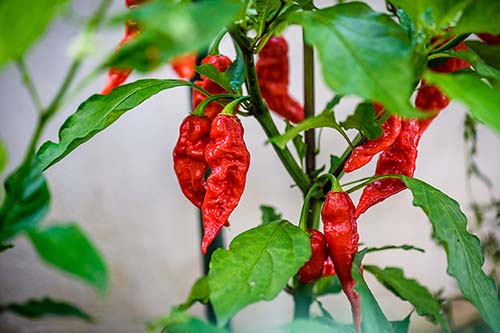
Whether you're tending a backyard bed in Savannah or a small orchard in North Georgia, here’s what every gardener should know about these seasonal stars.
Hot Peppers: Heat-Lovers That Deliver Big Flavor
May is peak planting time for hot peppers in Georgia. With soil temperatures warm and the risk of frost long gone, peppers planted now can thrive through the summer, bringing color and heat to your garden—and your plate.
What to Plant Now:
- Jalapeños, Serranos, and Cayennes for moderate heat
- Habaneros, Ghost Peppers, and Scotch Bonnets for the bold
- Specialty varieties like Shishitos or Poblanos for culinary variety
Growing Tips:
- Start with healthy transplants and give them full sun—at least 6–8 hours a day
- Provide consistent moisture, especially during flowering and fruiting
- Use mulch to retain soil moisture and suppress weeds
- Stake plants early to support heavy fruit loads later in the season
Bonus: Hot peppers are relatively pest-resistant compared to many other vegetables—a win for low-maintenance growers.
Pollinators: The Garden’s Most Valuable Workers
While hot peppers add spice to your garden, pollinators keep everything growing. Bees, butterflies, hummingbirds, and other beneficial insects are vital for the fruiting of many crops—including squash, cucumbers, melons, and even your prized peach trees.
How to Support Pollinators in May:
- Plant native flowers such as bee balm, black-eyed Susans, and coneflowers near your vegetable beds
- Provide continuous blooms throughout the season to support pollinators from spring to fall
- Create a pesticide-free zone in your garden to protect beneficial insects
- Offer a shallow dish of water with stones for bees and butterflies to rest and rehydrate
Why it matters: A well-pollinated garden not only increases fruit yield and quality—it also supports biodiversity and healthy ecosystems right in your backyard.
Peaches: The Signature Fruit of the South
Few things define Georgia gardening in May like the quiet, steady ripening of peaches. If you're growing your own trees—or planning to—you know that May is the month when peaches go from green promises to blushing, full-bodied fruit.
Peach Tree Maintenance in May:
- Thin fruits early in the month to avoid overburdening limbs and to promote larger, sweeter peaches
- Watch for signs of disease or pests, particularly brown rot and peach tree borers
- Maintain a consistent watering routine, especially in dry weeks, to support fruit development
- Consider using netting or deterrents to protect ripening fruit from birds and wildlife
Harvest Tip: Most Georgia-grown peaches begin to ripen in late May through July, depending on the variety and region.
A Garden That Grows with Intention
The intersection of hot peppers, pollinators, and peaches tells a larger story about successful gardening in Georgia: it’s about working with nature, planning for the season, and enjoying the diversity and richness that a Southern garden provides.
May is your opportunity to:
- Plant with confidence
- Create habitat with purpose
- Harvest with patience
As temperatures rise, so does the garden’s energy. With careful tending and an eye on your plants—and your pollinators—this month will set the stage for a season of abundance.
What’s thriving in your garden this May? Share your photos, stories, or questions with us—we’d love to hear how your garden is growing.